My First Timers Guide to Visiting the Grand Canyon’s South Rim
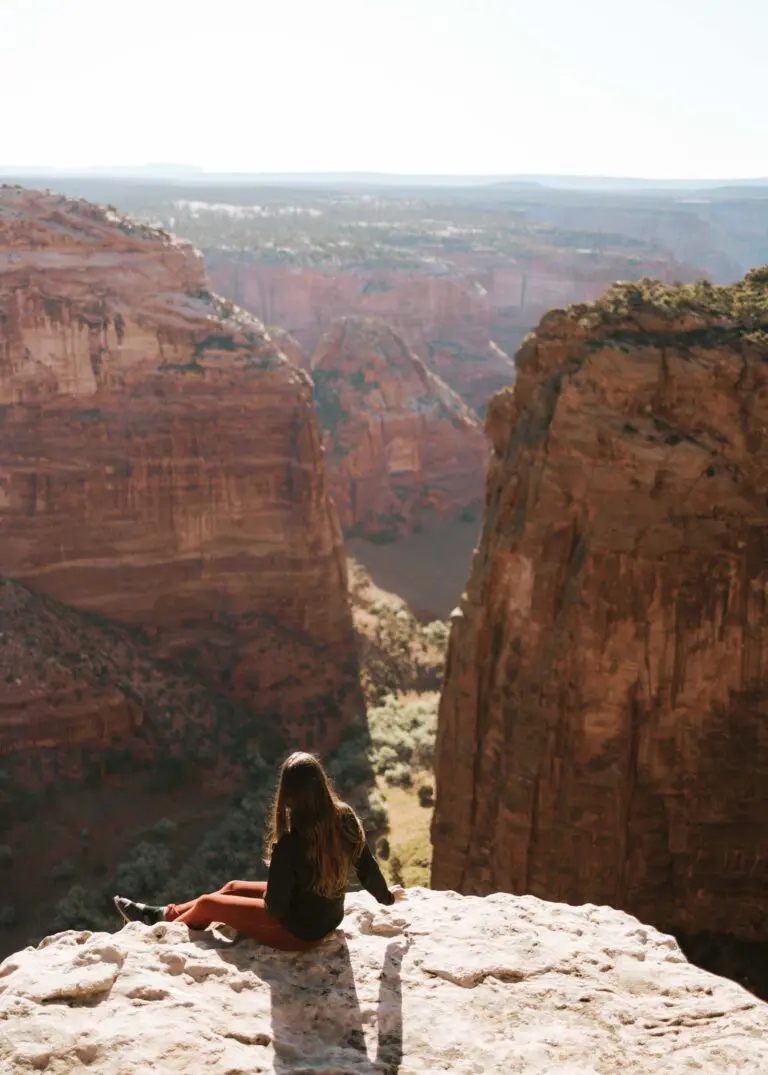
There truly is no place on earth like the Grand Canyon—and I can’t believe it took me 28 years of living a short flight away to finally visit! I guess I always secretly thought the Grand Canyon might be overrated… but I was oh so wrong.
In this first timers guide to the Grand Canyon I’m simplifying everything I wish I would have known before visiting for the first time—which hike(s) to choose, where to find official park updates (like trail closures), where to stay and eat close to the canyon’s rim, and more!

📍 Quick tips for your first visit to the Grand Canyon:
- 👍🏼 Check North Rim & Trail Statues: The North Rim closes seasonally, and its not abnormal for trails to close as well. Check the park’s official opening statues here.
- 🎟️ Entrance fees & passes: Entry is $35 per vehicle (valid for 7 days) or free with an America the Beautiful Pass ($80/year for U.S. residents, which can be ordered online from REI). For international travelers: Starting in 2026, non-U.S. residents aged 16 and older pay an additional $100 per-person surcharge on top of the standard entry fee. (I’m sorry, y’all)
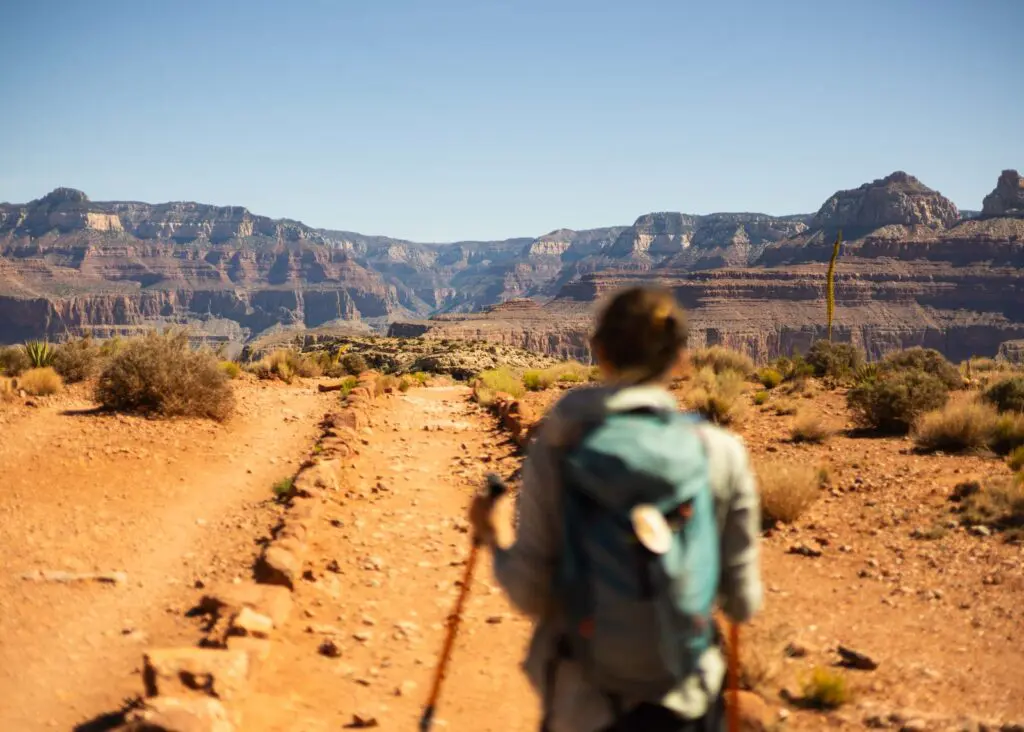
- ☀️ Prepare for Weather Extremes: The South Rim sits at 7,000 feet of elevation and is typically 20 to 30 degrees cooler than Phoenix or Sedona. Meanwhile, temperatures heat up quickly as you descend into the canyon. Bring layers for exploring the rim, and dress appropriately (and bring plenty of water) when hiking into the canyon.
- 🚌 Utilize the Park’s Free Shuttles: Some of the viewpoints and trailheads along the South Rim have no parking, so they’re only accessible via the free shuttle system or walking. Check the official shuttle routes here.
- 💦 Respect the Canyon & Heat: Every single year we lose hikers to the extreme conditions of the Grand Canyon. Please, please, please only hike prepared—don’t overestimate your physical abilities, pack plenty of water, and start early to beat the heat. Remember that the hardest part is the steep hike back up, especially given how much more difficult it is to breathe at elevation!
North vs South Rim
You have two main options for visiting the Grand Canyon: the North or South Rim. Though these park entries are only 10 miles apart as the crow flies, they are a 4.5 hour drive apart, so choose wisely!
The South Rim is open year round and receives the most visitors, it’s most accessible from Las Vegas and Phoenix, and there a handful of hotels, restaurants, and trails right along the south rim.
The North Rim is only open seasonally from mid-May through late-November, and unfortunately, all the North Rim facilities (including the historic Grand Canyon Lodge) were recently destroyed in the 2025 forest fire. Because of this, we chose to visit the South Rim and that’s what I’ll be sharing about in this guide. However, you can check the North Rim’s status on the official site here.
🥾 Hiking Rim to Rim: Assuming all the trails are operating and the North Rim is open, you can hike from one rim to another! This is an extremely challenging 21 to 24 mile trek with around 10,000+ feet of elevation gain—but certainly worth adding to your bucket-list if you’re an avid hiker!
Where to Stay at the Grand Canyon
There are six lodges located within Grand Canyon National Park along the South Rim—ranging from the more expensive historic lodges located just steps from the canyon’s rim, to more affordable options a 15-20 minute walk away. There’s also campsites at Mather Campground, which is about a mile from the rim and books out far in advance.
If it fits into your budget, my recommendation is to stay at one of the lodges within the park simply for convenience (especially if you plan to start hiking early!) I have a full article on where to stay at the Grand Canyon that covers all the lodges (and nearby hotels) in greater detail, but my recommendations are:
- 🌿 Yavapai Lodge (most affordable; where we stayed): Besides being the most affordable hotel in the park, we appreciated being conveniently located right next to the Village Market and Deli (the only grocery option), and right between Grand Canyon Village and the Visitors Center. It’s a short drive or long walk to the canyon’s rim, but still more convenient than staying outside the park.
- ✨ Kachina Lodge or Thunderbird Lodge (budget with Grand Canyon views!): Out of all the lodges, these slightly more affordable lodges both offer the most rooms with Grand Canyon views, and are located in Grand Canyon Village, just steps from the rim and most of park’s restaurants.
- 📍 Bright Angel Lodge (modern rooms in the heart of Grand Canyon Village): Beautifully decorated modern rooms and private cabins just steps from the rim and all that Grand Canyon Village has to offer! Closest to the Bright Angel trail that leads into the canyon!
If you choose to stay outside the Grand Canyon, the closest hotels are about 12 minutes away in Tusayan, including the budget-friendly Red Feather Hotel, or the Grand Hotel.
Food & Dining Options at the Grand Canyon
Within Grand Canyon National Park’s South Rim you’ll find about 15 different places to grab food, including 5 sit-down restaurants, and 10 casual food courts, coffee bars, and delis. And there’s also the Village Market and Deli where you can buy groceries and some prepared wraps, sandwiches, and salads.
Every lodge has a dining option (or one within walking distance), and Grand Canyon Village (Bright Angel Lodge, Kachina Lodge, Thunderbird Lodge) is where you’ll find the most restaurants.
From formal dining to the grocery shop, food prices trend toward the higher end, and unfortunately, there are only 30 rooms (at Maswik Lodge) out of the 900 hotel rooms at Grand Canyon lodges have kitchenettes where you can prepare your own food.
Wanting to save money on food (and ensure we had nutritious veggie options to fuel our hiking), we brought groceries from outside the park in our cooler and had some microwave-safe containers to heat up our meals. Since our room didn’t have a microwave, we had to use the single microwave available in the Yavapai Lodge dining room. Our favorites were freshly made wraps or microwaved rice and beans with some good salsa. Not the most delicious or convenient meals, but it helped us stay within budget!
We did end up buying some extra ingredients at the market, and splurged on one dinner at the Arizona Steakhouse (more about that later!) and some appetizers and drinks at a few other restaurants.
Things to do at the Grand Canyon (South Rim)
1. Walk the Rim Trail
The 13-mile rim trail that wraps along the southern edge of the canyon is a must even if you’re also hiking down into the canyon. And I don’t mean hiking all 13 miles (though you certainly can!), just enjoy walks along a short section or two throughout your time here.
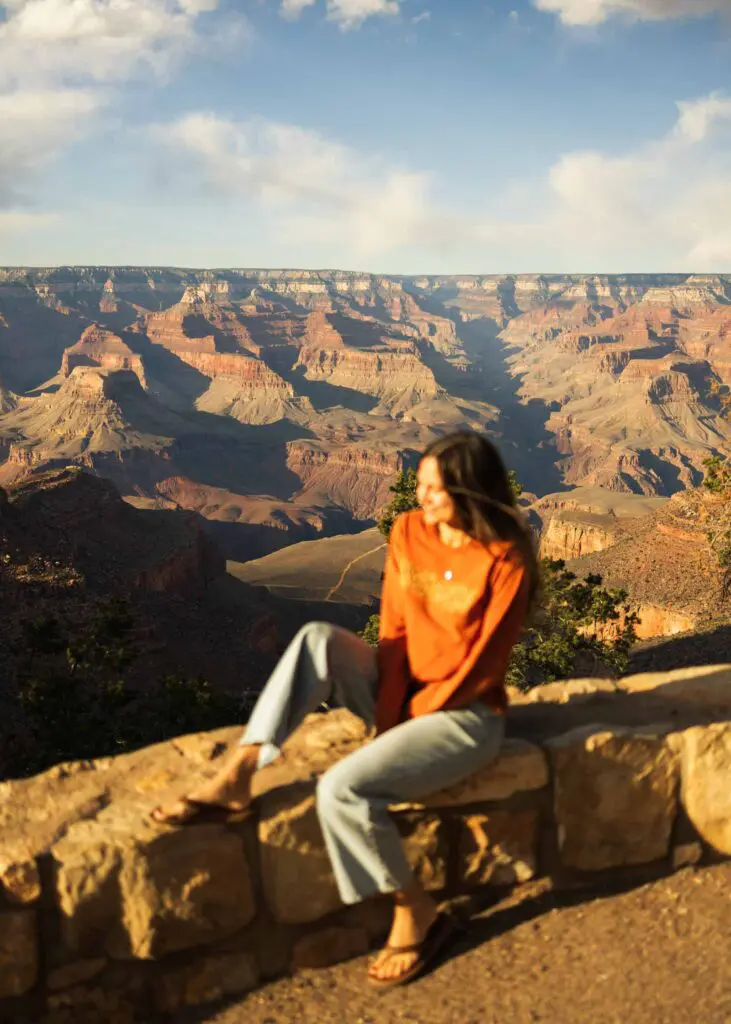

Since the shuttle busses run parallel to the trail, you can always hop on and hop off, just walk one direction without backtracking! Although the trail is mostly flat, and a lot of it is paved, you can still get winded (and dehydrated) hiking at such high elevation.
Be sure to bring water and snacks, and wear some good shoes—Altra Trail Runners are my favorite (I just hiked 500 miles across Spain in them and got no blisters!!)
Looking for recommendations on where to start? A great starting point is the walk between Mather Point (right by the Grand Canyon Visitor Center) and Yavapai Point, which has a small geological museum. See the official Rim Trail map here!
2. Explore Grand Canyon Village
Located a mile and a half east along the rim from the visitors center, Grand Canyon Village is the historic 1900s heart of the South Rim.
Home to a collection of 100-year-old hotels, restaurants, and small exhibits perched right over the canyon’s edge, Grand Canyon Village is the best place to stay (if you can afford a hotel here), and a lovely place for scenic stroll or dinner with a view!
This is also where you’ll end up if you take the fun, theatrical Grand Canyon Railway train from Williams, AZ—the same historic train route that connected the world to Grand Canyon Village back in 1901.
3. Hike Below the Rim
Whether you just trek down a couple miles, or make it all the way to the Colorado River at the base of the Grand Canyon, hiking below the rim is undoubtedly going to be your most memorable Grand Canyon experience—but also the most exhausting and potentially dangerous!
One thing that shocked me when planning my Grand Canyon trip is that some of the trails have water stations, while others don’t—and said water stations are only seasonal!! Before you start hiking, make sure you know what facilities are (and aren’t available), and of course, carry enough water and snacks.
Another key consideration is elevation. You start at 7,000 feet above sea level and descend as you hike below the rim—and every step down represents a step up you’ll have to climb on your way back.


There are two main options to hike below the rim at the South Rim:
- Bright Angel Trail (Best for Shade & Water): Conveniently begins from the eastern end of Grand Canyon Village, with a downward jaunt through a picturesque hole in the wall. Unlike the South Kaibab, Bright Angel Trail has some shade and seasonal water stations along the way. Ideal turnaround points for a day hike include the 1.5-Mile Resthouse (3 miles roundtrip, 1,120 feet elevation gain) or the 3-Mile Resthouse (6 miles roundtrip, 2,120 feet elevation gain).
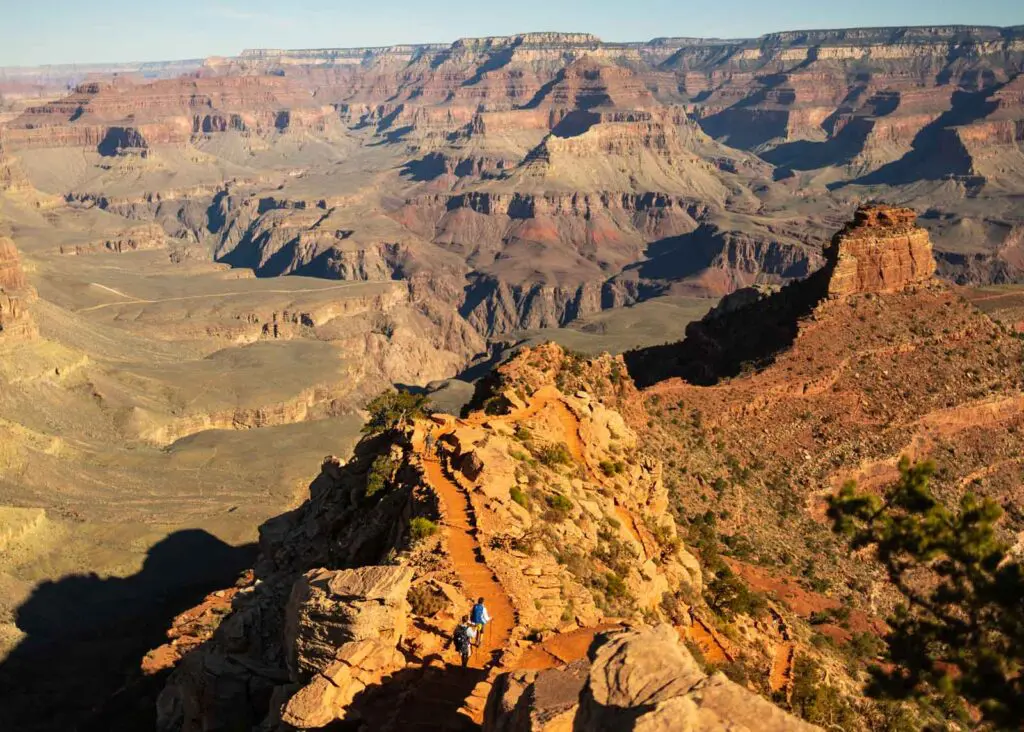
- South Kaibab Trail (Panoramic Views): Despite its lack of shade and water, we chose the South Kaibab Trail for the superior views as the first several miles follow a picturesque ridge line. We hiked 6 miles roundtrip (2,040 feet elevation gain) to Skeleton Point and throughly enjoyed it! For a shorter day hike, you could hike 1.8 miles roundtrip to Ooh Aah Point, or 3 miles roundtrip to Cedar Ridge. Keep in mind that you must use the free shuttle bus system to get to the trailhead since parking is not available.
4. Have Dinner with a Canyon View
There are a handful of restaurants in Grand Canyon Village, some of which have peek-a-boo canyon views! We heard these restaurants require advanced reservations, but were able to get a same-day reservation at the Arizona Steakhouse by walking in right as they opened. However, if you’re planning in advance, it’s best to make reservations online!
We really (surprisingly) enjoyed our dinner at Arizona Steakhouse—Josh and I are both vegan, and the plant-based options were much more numerous than we would have expected. And we appreciate the restaurant’s dedication to sourcing local ingredients from Arizona farms.
The other Grand Canyon restaurant with a canyon view is El Tovar Dining Room, which has the coziest log cabin atmosphere with Native American murals.
5. Watch the Sunset
Watching canyon’s walls glow in shades of orange, pink, and purple as the sun goes does is a non- negotiable must-do in my opinion! Of course, sunset times change throughout the year, so be sure to check—we appreciated that our hotel had a display with the daily sunset (and sunrise) time.

A few favorite places to watch the sunset over the Grand Canyon include:
- 📍 Mather Point: Just a 5 minute walk from the visitors center, Mather Point is the most popular spot to watch the sunset.
- 📍 Hopi Point: This is where we were recommended to watch the sunset, supposedly the views are better than Mather Point and its much less crowded, but you need to take the Hermits Rest Shuttle Bus or walk along the Rim Trail to get here.
6. Attend a Ranger Talk
The Grand Canyon park rangers offer a variety of free daily programs (check for official details here), ranging from a guided rim walk to the geology talk at Yavapai Geology Museum.
We happened to stumble up on the daily geology talk and I’m so glad we did—it was hosted in an open-air amphitheater overlooking the canyon. We got to hear about the canyon’s geological history from the most friendly, engaging, and funny park ranger, and of course, were able to ask questions as well.
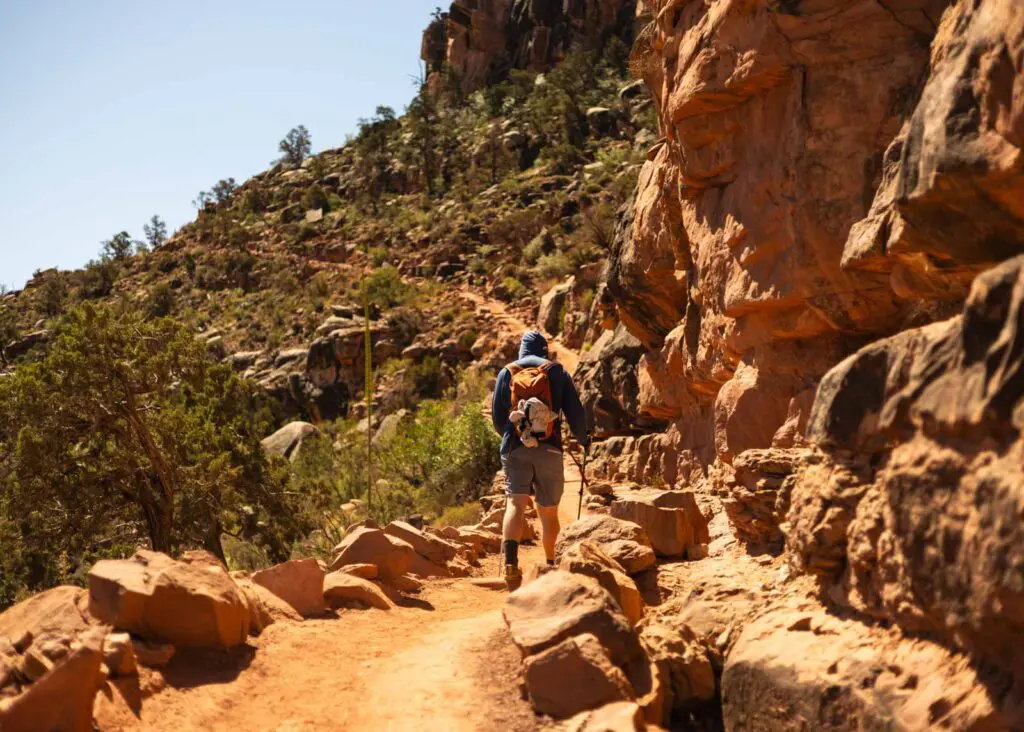
7. Backpack the Grand Canyon
Overnight backpacking (or staying at the sought-after Phantom Ranch) is the best way to experience the bottom of the Grand Canyon, 4,600 feet below the South Rim.
That said, a Grand Canyon backpacking trip requires quite a bit of planning, and of course, physical abilities. Backcountry permit reservations typically need to be made several months in advance on Recreation.Gov, and you have to enter the lottery for a stay at Phantom Ranch.
More Arizona Travel Guides
- 12 BEST Things to do in Page, Arizona (Must’s & Hidden Gems)
- Visiting the Navajo Nation: What We Did & Where We Stayed
- 10 Slot Canyons in Page, AZ (Antelope Canyon & Alternatives)
- FUN 3 Day Sedona Itinerary: Ruins, Hikes & Swimming Holes
- Where to Stay in Sedona for First Timers: Central & Scenic
Save for later on Pinterest: