Snorkeling with Sea Turtles at Maui’s Turtle Town
I’ve been to Maui three times in the past few years, and always stay in Kihei. Most mornings I start my day by snorkeling along the reef across the street from my condo… to this day, it’s the place I’ve seen the most sea turtles in Hawai’i, even after nine trips around all four main Hawaiian islands.
But it wasn’t until my most recent Maui trip that I learned my secret little spot has a name—Turtle Town. And it’s not all that secret… at least not amongst the locals!
In this article I’m sharing all about Turtle Town in Kihei, Maui, including how to find it, plus some essential snorkel tips to maximize your time exploring this honu haven.
✨ Save for later: 17 Maui Hidden Gems for Exploring Off the Beaten Path
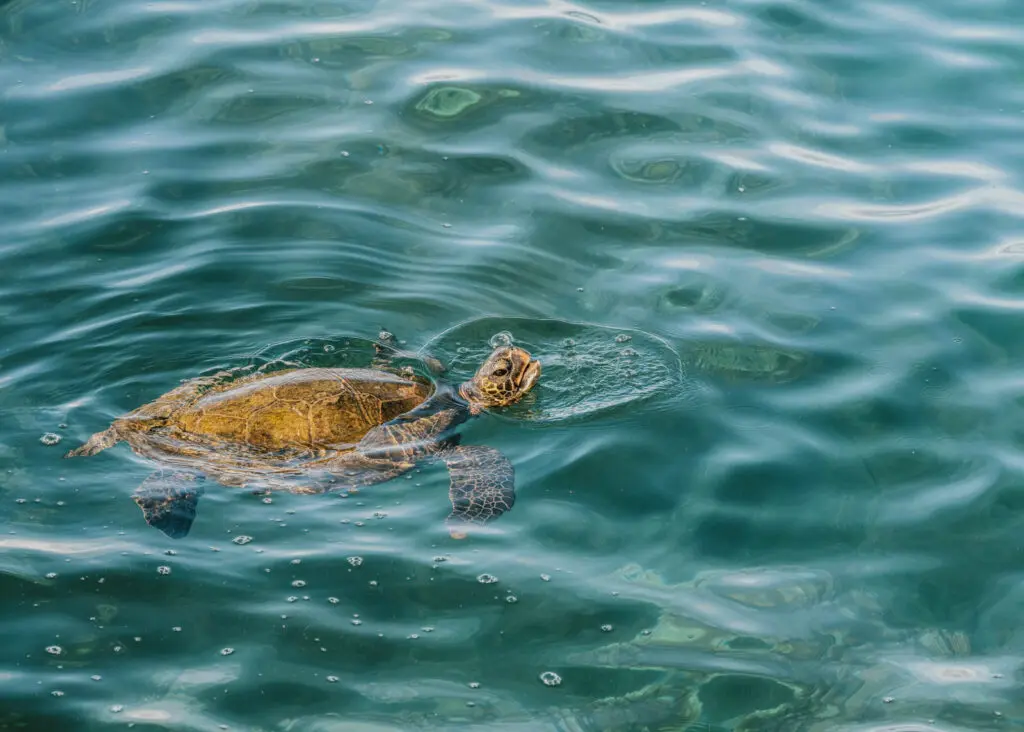
About Maui’s Turtle Town
There are many places in Hawaiʻi lovingly referred to as Turtle Town, so it can get confusing! But in this article, I’m sharing about the super accessible Turtle Town in Kihei, Maui.
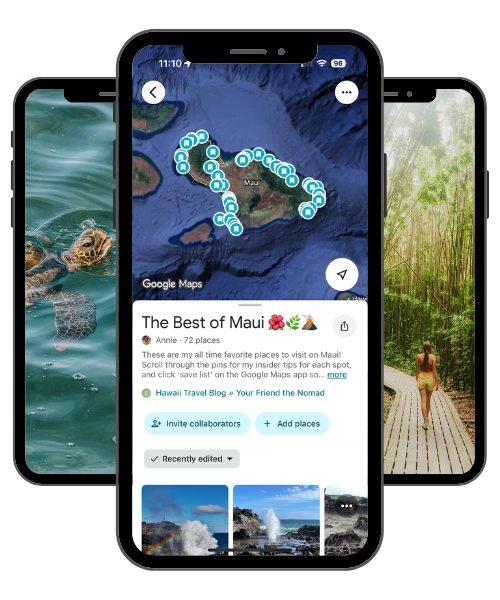
This Turtle Town is located right offshore from the volcanic rocks that run between sandy Kama‘ole Beach III and the Kihei Boat Ramp (and its pinned on my free Maui map). Above the volcanic rocks is the Eddie Pu Birding Trail, which is a lovely little walking spot where you can spot nesting birds, and maybe a sea turtle from above!
Kihei Turtle Town itself a roughly 1,000-foot-long span of coral reef right along the shoreline here that seems to be a favorite hangout spot for honu (sea turtles). In this area I’ve seen dozens of sea turtles feeding, resting in cozy nooks between coral, and gracefully gliding past me.
Before we dive into the details, here are a few important tips to maximize your snorkeling and stay safe:
- 🌅 Snorkel in the morning when possible: The ocean is usually the calmest in the morning, and the water is usually clearer.
- 🤿 Bring your own snorkel gear (and invest in good gear!!) You’ll have such a better time snorkeling with high-quality gear that actually fits you right! I love my Cressi snorkel mask, and use a special neoprene mask strap that protects my hair. I also love my waterproof GoPro for photos!
- 👀 Use mask defogger, it makes a HUGE difference. Sometimes ocean visibility is great but you can’t see much because of your mask. Lots of folks love using dish soap because its cheap, but this reef-friendly defogger is my favorite, and its carry-on size.
- ❌ Do NOT use full face snorkel masks: Choose a mask that works for you, but I highly urge you to avoid full face snorkels (like this one). They are dangerous (due to CO2 buildup) and linked to snorkeling deaths like this couple who tragically died snorkeling on right here in Kihei recently.
- 🏖️ Watch the ocean before getting in: I know it can de difficult to wait, but I highly recommend assessing the ocean conditions for at least a few minutes before getting in. Notice if the conditions change over time, and try to figure out the best areas to snorkel from the shore.
- 🌊 Understand ocean safety: Regardless of your experience level or swimming skills, be sure to review Hawaii’s official ocean safety guide before your trip.
Protecting Maui’s Honu Population
Sea turtles are usually unafraid of humans, they have this gracious, almost sacred presence. And encountering even just one for a few moments is so special, but as visitors in their ocean home, we must respect them, their coral home, and also the local authorities who steward them.
There a few ways we can do this:
- 🐢 Always stay at least 10 feet away, both in the water and on land. Honu are protected under the Endangered Species Act (ESA) and touching, feeding, surrounding, and disturbing sea turtles is also prohibited. Please don’t be that person.
- 🧴 Avoid toxic sunscreen and lotions, which damage Hawaii’s delicate coral reefs. Snorkeling visibility is usually best in the morning, when the sun is least powerful so sometimes you can get away with no sunscreen. Otherwise, opt for reef safe (mineral) sunscreen.
- 🪸 Never step on coral, it’s a living organism that can be damaged by human touch… and will also scratch your feet!
- 🏖️ Watch for sleeping honu on the beach. Sea turtles sleep and nest on the beach at all times of day, and I’ve seen far too many blissfully unaware tourists nearly trip over sea turtles, thinking they’re rocks. I even had a sea turtle come sleep a few feet from my beach towel on Oahu’s North Shore, which meant I had to move to a different spot on the beach.
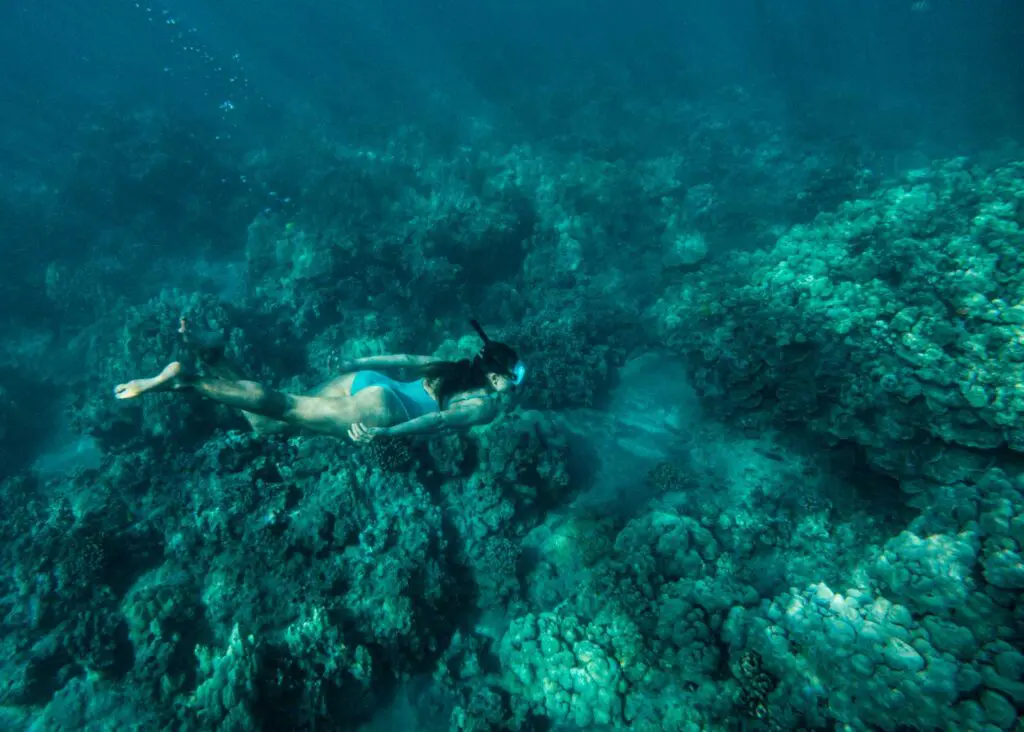
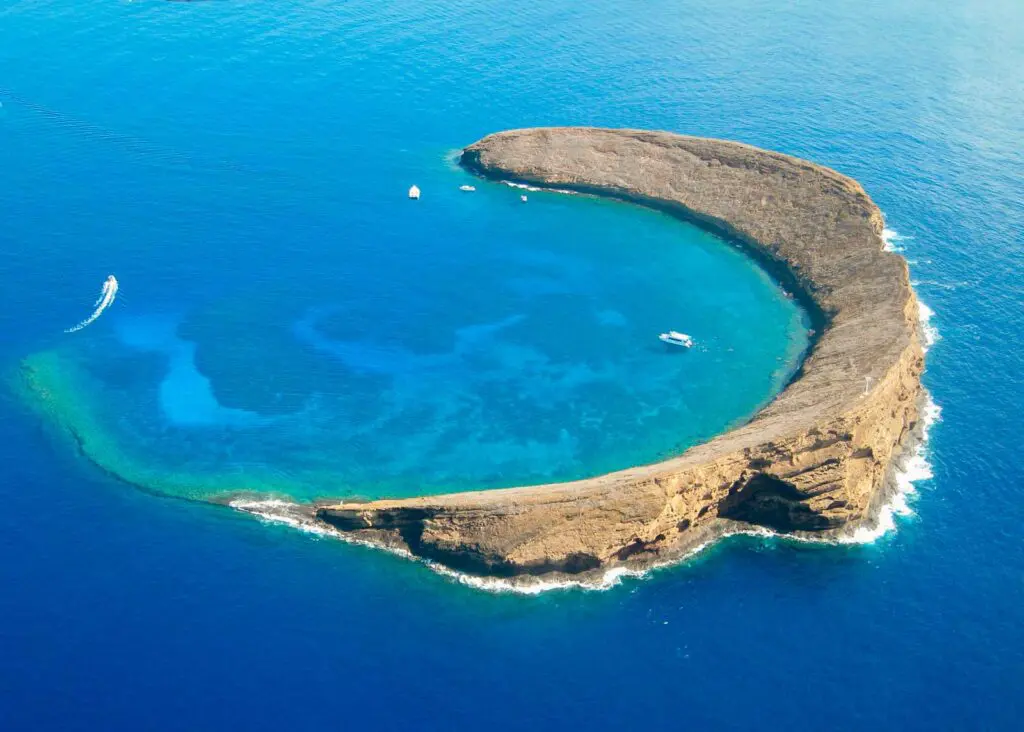
A local guided snorkel tour will take you to both Turtle Town & Molokini Crater!
Tips for Snorkeling at Turtle Town
There are two ways to snorkel at Turtle Town: join a local guided snorkel tour (recommend for beginners) or snorkel the reef yourself from the shore.
Since there are no lifeguards at Turtle Town, I would advise against snorkeling by yourself. Go with a buddy and be sure to check the South Shore snorkel conditions on the daily Maui Snorkel Report.
To find Turtle Town, head to Kama‘ole Beach III (has a small free parking lot) and walk to the small cove at the southern end of the beach. It’s pretty common to see sea turtles swimming in the cove here—we saw 5-6 in the cove at once on our most recent Maui trip—but Turtle Town itself is along the reef just south of here.
Enter the water and swim around the volcanic rocks on the southern edge of the cove and you’ll reach a small reef that extends about 1,000 feet south. This is Turtle Town, it extends all the way to the Kihei Boat Launch, but I’d be careful around the boat launch… because of boats, of course!
Snorkeling visibility changes throughout the day, and is usually clearest in the morning, so I always recommend snorkeling first thing in the morning. That said, sometimes you just get bad conditions—on my most recent visit, the visibility pretty poor the whole week, but I’ve had excellent visibility for days on past trips.
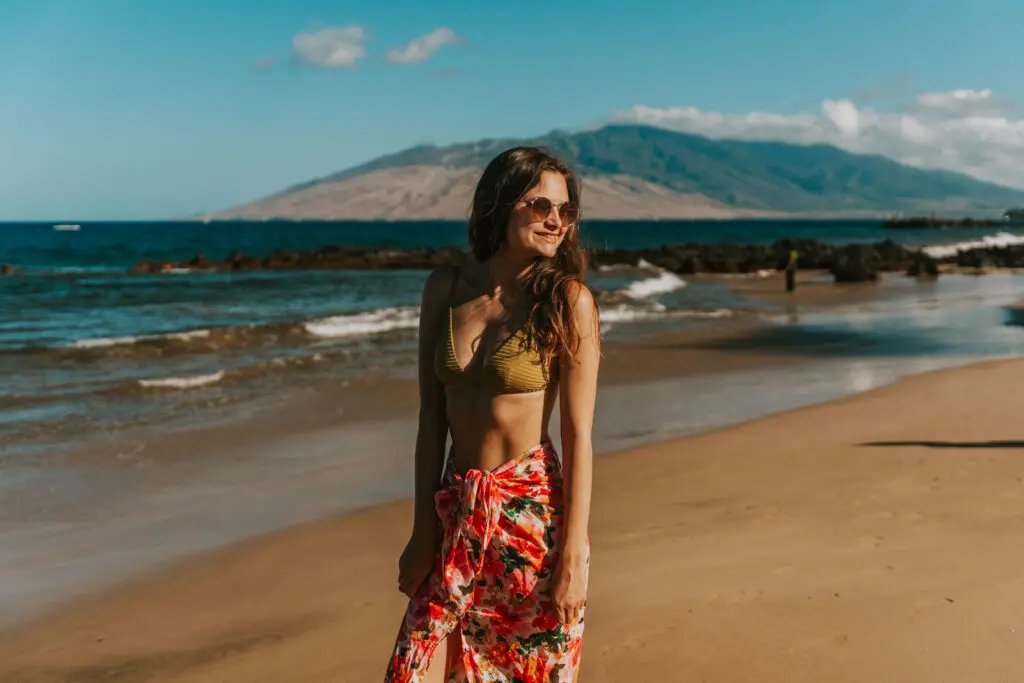
Kamaole Beach III, my favorite Maui beach, and a great spot to see sea turtles, right next to Turtle Town!
Spotting Sea Turtles from Land
Running along the shoreline above Turtle Town is the Eddie Pu Birding Trail, a quiet coastal path and nesting bird sanctuary. From the volcanic rocks up here, you can often spot honu surfacing for air along the reef below.
I’ve also seen dozens of sea turtles swimming in the cove at Kama‘ole Beach Park III, which is also simply my favorite Maui beach for swimming and sunbathing! Hang out here for a few hours and you’re bound to see a few honu.
Dive Deeper: Facts About Hawaii’s Sea Turtles
There are five different sea turtle species that call Hawai’i home, but the most common is the Hawaiian green sea turtle, or honu in Hawaiian. These gentle giants are primarily herbivores and spend their days grazing on algae and seagrass.
Honu are also remarkably long-lived, with lifespans of 60–100 years—maybe that’s why they seem so wise and ancient? And interestingly, they don’t reach reproductive age until they’re 25–40 years old. Once they do, females return to nesting beaches every few years to lay eggs. But only about one in a thousand hatchlings survives to adulthood.
More Hawaii Travel Guides
- The Perfect 5 Day Maui Itinerary: Jungle, Volcano & Beaches
- How to Spend One Day at Haleakalā, Maui’s Volcano
- The Perfect 1 Day Road to Hana Itinerary (& What to Skip)
- Hawai’i Big Island Travel Guide (For First-Time Visitors)
- 21 Kauai Hidden Gems for Exploring Off the Beaten Path
- 4 Day Oahu Itinerary Full of Sunshine, Aloha, and Adventure
Save for later on Pinterest:


