The Perfect 3 Day Tokyo Itinerary: Traditional & Modern
I always say I’m not a city person, but the largest city in the world has a special place in my heart! I first visited Tokyo ten years ago and spent two weeks galavanting around the city with my Japanese family—my exchange ‘siblings’ that lived with me for a year each back home.
Fast forward a decade and I brought my husband to Japan for the first time. We spent a few days in Tokyo at the beginning and end of our trip, and had so much fun wandering colorful izakaya-lined alleyways and tranquil shrine gardens alike, sipping matcha in retro bathhouses and ancient teahouses, gazing down on the city at night while tasting bubbly Asahi beer at its source, and more!
This three day Tokyo itinerary combines all these adventures and more. It’ll take you off the beaten path, and ensure that you see the city’s main sights strategically. Throughout the itinerary I mention hidden gems and my favorite local-guided experiences. Japanese culture, religion, and food can feel very foreign and confusing even to a repeat visitor like me, and these local-led tours deepen each experience by helping you understand what you’re seeing, tasting, and experiencing—through the eyes of a Tokyo local!


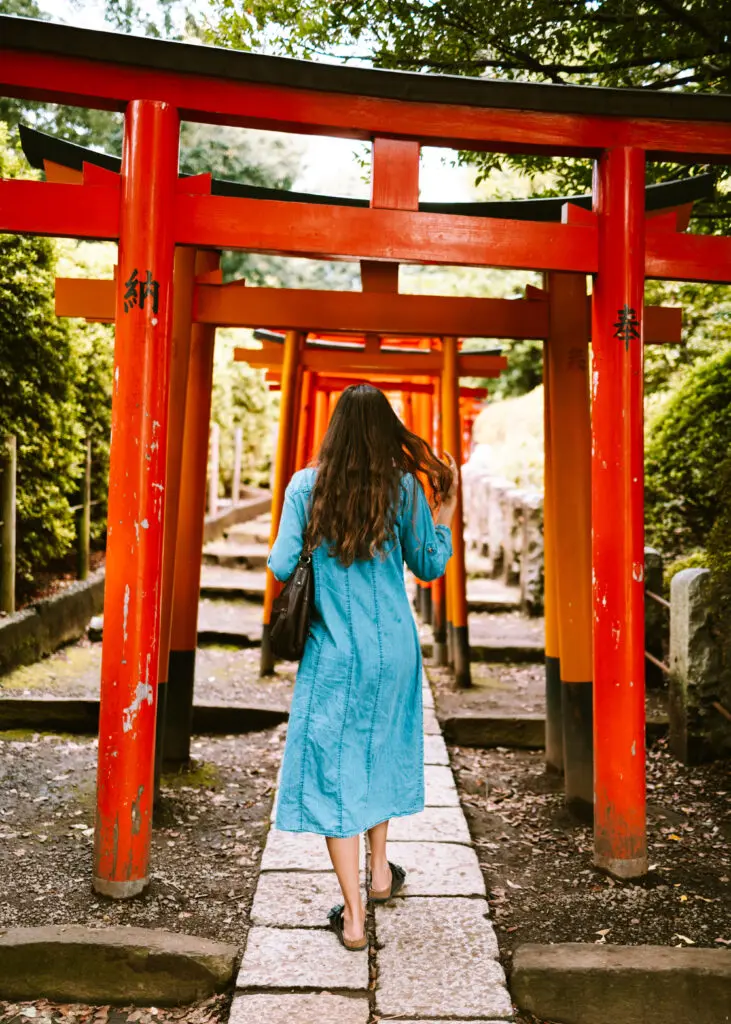


🎟️ Reservations to make in advance:
- Day 1: Meiji Shrine Tour, Shibuya Sky Ticket, Shinjuku Bar Hopping Tour (Optional)
- Day 2: Asakusa Rickshaw Tour (Optional)
- Day 3: Yakatabune Dinner Cruise (Optional)
🗼You may also want to add-on: Ghibli Museum, TeamLab, Sumo Wrestling, or Mt. Fuji Day Trip
Where to Stay in Tokyo
We were in Tokyo at the beginning and end of our most recent 10 day Japan trip, and both times we stayed in Asakusa… and loved it! Specifically, we stayed in:
- 👘 Traditional room with a pagoda view at Ryokan Asakusa Shigetsu: Although we stayed at some lovely places throughout Japan (including an entire traditional house in the countryside and a $700 room in a Buddhist temple), this cozy budget-friendly room with a view of Sensō-ji Temple’s pagoda just might be my favorite! The ryokan has small shared traditional baths (with views, too!) and is just steps from Asakusa’s famous Nakamise Dori street and the temple.
- 🌃 Room with a river view at Hostel Chapter Two Tokyo: I rarely stay at hostels, but our private room here had a private balcony overlooking the Sumida River, plus access to the hostel’s rooftop and bar… and it was only a block from Asakusa Station! The only con was that we had to use the shared showers (but had a toilet and sink in our room).
Some other places we considered booking in Asakusa include Kaminarimon Ryokan (super luxurious traditional stay that would be much more pricey in the US!) and SAKE Bar Hotel Asakusa (another luxurious but not-too-expensive hotel that offers free sake and beer!)
☁️ Sleeping in traditional Japanese beds: Although many tourists specifically look for hotels with Western-style beds, I challenge you to give Japanese futon beds a try! I may be biased (I actually sleep on a Japanese bed at home) but I slept very well in Japan, and hotels with traditional beds tend to be a little cheaper!

View from our room at Ryokan Asakusa Shigetsu in Asakusa
Why Asakusa?
Home to one of Tokyo’s largest (and most enchanting) temples and situated along the Sumida River, Asakusa is a place you’ll want to visit while you’re in Tokyo, which retains a bit more of that old-Tokyo feel compared to the billboard-adorned Shibuya and Shinjuku neighborhoods, which are the more popular places tourists tend to stay.
We also enjoyed the shops and streets in Asakusa more—you still get those charming little izakaya-lined streets, and lots of shopping options, but Asakusa seems to lean more toward local-owned artisanal shops rather than the big luxury store you’ll find in other parts of Tokyo.
But the biggest reason we chose to stay in Asakusa over Shibuya or Shinjuku is that its a bit closer to Narita Airport, which we were flying in and out of. Meanwhile, Shibuya and Shinjuku are closer to Haneda Airport. (Thanks to my friend Bri for point this out when I was planning my trip!)
All that said, if the bright billboards and izakaya-packed alleyways of Shibuya and Shinjuku are what are drawing to you to Japan, you might want to stay in that area regardless of where you’re flying into. 👉🏼 Best hotels in Shibuya.
🚊 Getting to your Tokyo hotel from the airport:
- From Narita: Two main ways to get to Asakusa include the high-speed Skyliner to Ueno (plus a transfer onto the subway to Asakusa) or the Narita Skyaccess Express (longer but goes directly to Asakusa). After trying both, we prefer the Skyliner, its faster, more frequent and more comfortable even with the transfer at Ueno Station!
- From Haneda: I’d take this $42 private transfer which takes you to anywhere in downtown Tokyo without the hassle of riding the train! Alternatively, take the Keikyu line directly to Asakusa, keep in mind it only runs until 5pm!
How to Spend 3 Day in Tokyo
On my recent trip to Japan we spent three nights (two full days) in Tokyo at the beginning of our trip, and then one night (two half days) here at the end. It ended up being three-ish days worth of exploring Tokyo, so I’m reformatting our Tokyo itinerary into three days for you in this article… all optimized so you spend the least possible time stuck on the subway 👍🏼
If you’re curious about or full Japan itinerary, check out my 10 Day Japan Itinerary!


Day 1: Meiji Jingu Shrine, Shibuya, Shinjuku & Optional Shimokitazawa Thrifting
On day one we’re heading right to the heart of the largest city in the world…. we’ll cross the iconic Shibuya Scramble and pass through the busiest train station in the world. So, be prepared for crowds… and more crowds!
But trust me, these Tokyo neighborhoods are still so worth visiting—even if you’re more of an off-the-beaten-path traveler like me. The rest of our time in Tokyo will be spent in quieter areas, but today we’re soaking in the chaos of Japan’s version of Times Square, wandering little alleyways tightly packed with tiny historic bars (and finding the best ones with a local guide!), and exploring the 170-acre lush forest that surrounds Meiji Shrine.
🥞 Where to find breakfast in Tokyo: Most cafes and restaurants in Tokyo don’t open until mid-morning, so finding breakfast can be tricky (especially if you have dietary restrictions). Surprisingly, Starbucks is a reliable option (with vegan donuts and other food), or grab something at one of Japan’s beloved conbini (convenience stores).


Yoyogi Park, Meiji Jingu Shrine & Harajuku
📍Start: Harajuku Station | ~35-45 minutes from Asakusa Station (numerous train routes)
We’re starting off our Tokyo adventures at a place that symbolizes the convergence of traditional Japanese culture and Western influence, Meiji Shrine.
But before exploring the shrine and learning all the hidden symbolism behind it, stop at Café Mori no Terrace, right at the entrance to Yoyogi Park (where Meiji Shrine is located!) Here you can sit and watch visitors and locals alike bow and enter the 40-meter tall torii gate at the park’s entrance, while sipping your first matcha (or coffee) of the trip!
And since this will likely be the first of many shrines (and temples) you visit in Japan, I highly recommend exploring Meiji Shrine with a local tour guide who can bring to life the shrine’s history—and help you understand the difference between Japan’s Shinto shrines and Buddhist temples. We went on this $35 walking tour at Meiji Shrine and it set the tone for the rest of our trip!
Either way, here are a few things to know about Meiji Shrine:
- The shrine was built in 1920 to honor Emperor Meiji (1852-1912) and Empress Shoken (1850-1914)
- It’s surrounded by a 170-acre forest with over 100,000 donated trees from around Japan and abroad
- Near the shrine entrance you’ll find a row of of sake barrels across from a row of French wine barrels. The sake barrels symbolize Japanese tradition and the wine barrels symbolize Japan’s openness to the Western world, which began in the Meiji period
- The shrine and torii gates highlight natural wood tones instead of the usual bright red seen at many shrines
After the shrine, its a short walk over to Harajuku’s famous Takeshita Street, a pedestrian-only shopping street known for kawaii culture. However, don’t be surprised if it doesn’t match the descriptions you see online. The street isn’t quite as quirky and fun as it used to be (back when I visited Tokyo ten years ago).
🍜 Lunch Options: We enjoyed an early lunch at Vegan Bistro Jangara, the spicy ramen there ended up being one of the best things we ate in Japan! Then we had another late lunch/early dinner at Masaka, a vegan izakaya in Shibuya.
Cat Street to Shibuya Crossing
From Harajuku, walk toward Cat Street (pinned here), a shopping street that connects Harajuku to Shibuya, it’s about a 20 minute walk. You could also jump on the train for a quick 3 minute ride.
Along the way we stopped at Creative Space Akademeia 21 Harajuku, a small free art gallery. When we visited there was a beautiful display from a Japanese artist that blended traditional Japanese style with street art.


Shibuya Crossing, Shibuya Sky & Shopping
From the end of Cat Street walk toward one of the world’s busiest street crossings, the Shibuya ‘Scramble’ Crossing. It’s unapologetically overwhelming—and a bit awe-inspiring to think about the thousands of individual lives being lived right in this spot.
Before you go—another enticing add-on to your time in Shibuya is Shibuya Sky… which I honestly wish I would have added to my itinerary! Located on the 47th floor of the Shibuya Scramble Building (yes, with a view of the crossing below), Shibuya Sky has one of the best views of the Tokyo skyline.
It is known to sell out far in advance, but my local friends tell you can actually find cheaper tickets on Klook with more availability—sounds too good to be true, but its not!!
🍜 Early Dinner Options: We wandered into the basement ‘Chaos Kitchen’ in the Parco Mall Building, which is filled with small izakyas and eateries, including where we ate, Masaka.
Optional: Shimokitazawa Thrift Shopping
Depending on how long you spend in Shibuya, you could jump on the train and head 6 minutes over to Tokyo’s thrift capital, Shimokitazawa. We popped over here on our last day in Tokyo, and checked out a few of the neighborhoods hundreds of thrift shops.
Heads up: a large majority of Japan’s thrift stores sell imported American and European clothes. If you’re like me and looking for vintage Japanese pieces, you may have to look a little harder! Here’s a quick overview of some of the Shimokitazawa thrift shops we visited:
- Grizzly: A small thrift shop we stumbled upon and had the most pieces that interested me, including more feminine Japanese pieces.
- Tanpopo House Shimokitazawa: Everything is ¥105 (~70 cents), and they have a generous selection of kimonos!
- 2nd Street: Chain consignment store that we shopped at in both Tokyo and Kyoto. Every location had a different selection, but overall 2nd Street seems to lean more toward Japanese clothing (rather than American imports) and prices seem fair!
- New York Joe: A thrift shop we’d read about online that’s inside an old bathhouse. The selection was interesting but it was a little on the pricey side.
- Bazzstore: Lots of designer and vintage American pieces, which isn’t what I was shopping for, but a large selection!
My suggestion is to wander through Shimokitazawa and see what you discover! The most intriguing shops we visited were ones we hadn’t heard of, and I’m sure if we had more time we would have found even more hidden gems!
Also See: Where to Stay in Tokyo for First Timers: Convenience & Charm

Izakaya-Lined Alleyways & Godzilla in Shinjuku
A 9-minute train ride from Shimokitazawa or 7-minute ride from Shibuya will take you to Shinjuku Station, the world’s busiest train station… nearly 4-million people pass through here daily, and there are over 200 individual exits!
But of course, Shinjuku is much more than a train station, it’s one of Tokyo’s liveliest—and grittiest—neighborhoods, with towering billboards, hidden alleyway bars, all under the watch of Godzilla who peers down from the Toho Building.
And Shinjuku is best experienced after dark, when you can wander the lantern-lit alleyways of Golden Gai and Omoide Yokocho (Memory Lane), lined with hundreds of tiny little izakayas.
Keep in mind that many of these small bars only serve local ‘members’, and most have a cover charge. Waits for food can be excessively long, too… so while these alleyways are picturequse and so worth seeing, I’d probably eat somewhere unless you’re able to skip-the-line with a local-led tour like this!
This bar hopping tour of Shinjuku takes you to several local spots in Golden Gai, Omoide Yokocho, and Kabukicho. You’ll learn about Golden Gai’s post-war origins, answers to the questions you’re afraid to ask about Kabukicho’s love hotels and hostess bars, and all about the 13 different local dishes you get to try!
(I would have loooooved to join this tour if it was vegan-friendly, but the 5,000+ 5-star reviews give me confidence in recommending it!)
🏙️ Is Shinjuku Safe? Shinjuku is the place I felt most on edge in Tokyo, partly because I knew that its home to a red light district, but I still felt safer than I do in most US cities. But, what was most unsettling was the announcements over loudspeakers warning tourists of scammers. Use common sense, and consider joining the bar hopping tour with a trusted guide if you’re traveling alone!


Day 2: Morning Tea, Ghibli Clock, Sensō-ji Temple, Ashai Sky Room & Optional Thai Massage
On day two we’re exploring a bit of Central and East Tokyo at a slower place than yesterday. And if you booked a hotel with a traditional bath (like where we stayed in Asakusa), there’ll be time to enjoy it today!


Matcha at Nakajima Tea House & Hamarikyu Gardens
📍Start: Shimbashi Station | ~15-20 minutes from Asakusa Station on the Asakusa Line or Ginza Line
Start off your morning sipping matcha in a traditional 1700’s tea house in the middle of a tranquil pond, surrounding by Japanese gardens… hidden in the middle of Tokyo!
Once a resting place from shoguns and nobels, Nakajima Tea House is located inside the peaceful Hamarikyu Gardens and a bit off the tourist trail! The gardens themselves are also worth exploring, and a welcome slow down after all the busy, billboard-adorned streets we wandered yesterday.
The garden opens at 9am, and costs ¥300 (~$2) to enter. It’s about a 20-minute walk from Shimbashi Station, so to optimize your time, I’d aim to arrive at the station around 8:40ish.

10am Show at the Ghibli Clock
If you’re visiting on the weekend, leave the gardens in time to see the Ni-Tele Really Big Clock come to life right before 10am. Designed by Hayao Miyazaki, the founder and director of Studio Ghibli’s most whimsical films (Spirited Away, My Neighbor Totoro, Ponyo, etc), this clock puts on a little mechanical show several times a day:
- Saturdays and Sundays: 10am, 12pm, 1pm, 3pm, 6pm, and 8pm
- Weekdays: 12pm, 1pm, 3pm, 6pm, and 8pm
The short ‘show’ starts a few minutes before the hour, so make sure you get there 5-10 minutes beforehand! And keep in mind that you’ll want to be up on the second story (climb up some stairs!) outside of where the Ghibli Clock is pinned on Google Maps.
✨ Is the Ghibli Clock worth seeing? I’m a huge Studio Ghibli fan, but seeing the clock honestly wasn’t a huge priority for me, partly because the ‘show’ only lasts a few minutes. That said, we did enjoy seeing the 20-ton clock come to life, but if you’re not doing anything else in the area, or the timing doesn’t work out, you can certainly skip it.


Sensō-ji Temple & Asakusa by Rickshaw
Head back to Asakusa from Shimbashi Station in time to explore Asakusa by rickshaw (reserve here). If you’re staying in Asakusa, this will be a great introduction to the neighborhood (your rickshaw driver will point out plenty of restaurants, hidden streets, and lesser known shrines to see later), and if you’re not, it’ll be an efficient way to experience Asakusa with limited time!
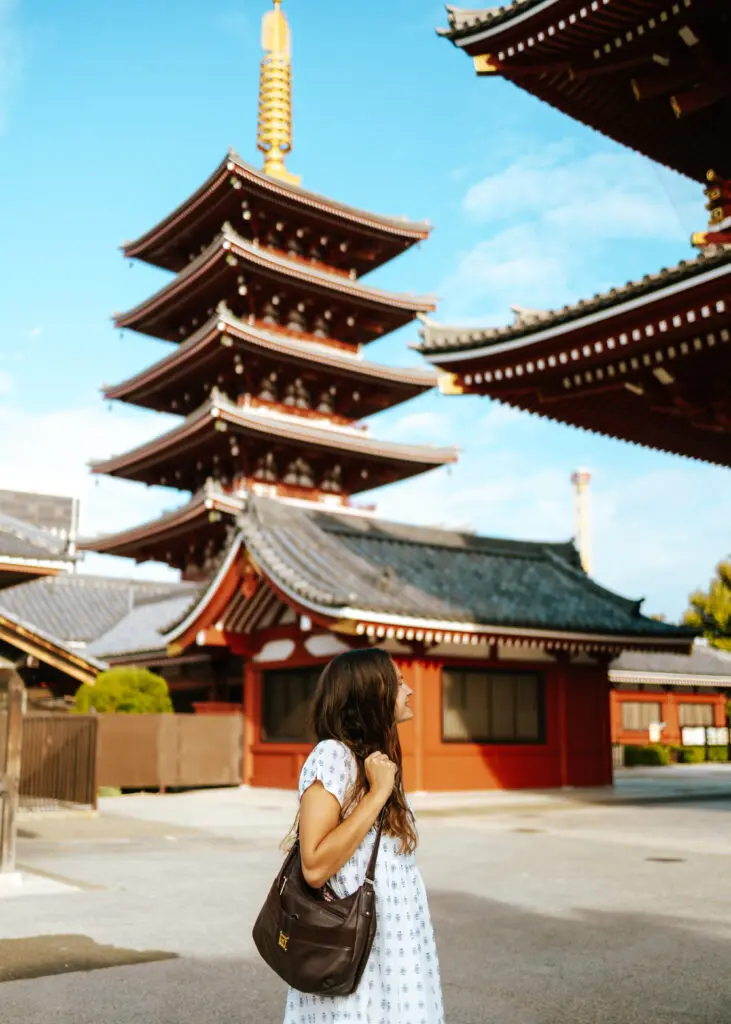
Afterward you’ll want to experience Sensō-ji Temple on foot—painted in vibrant red, green, and white, it’s the oldest Buddhist temple in Tokyo, dating back to 645. Approach the temple from the bustling Nakamise Dori street, which is lined with 90 different vendors, many of which have been in operation here for hundreds of years!
Since it was so close to where we were staying, we visited Sensō-ji Temple (and walked along Nakamise Dori) several times during our trip. It’s quietest in the morning and evening, and busiest when the shops are open throughout the day.

Asakusa Shopping & Exploring
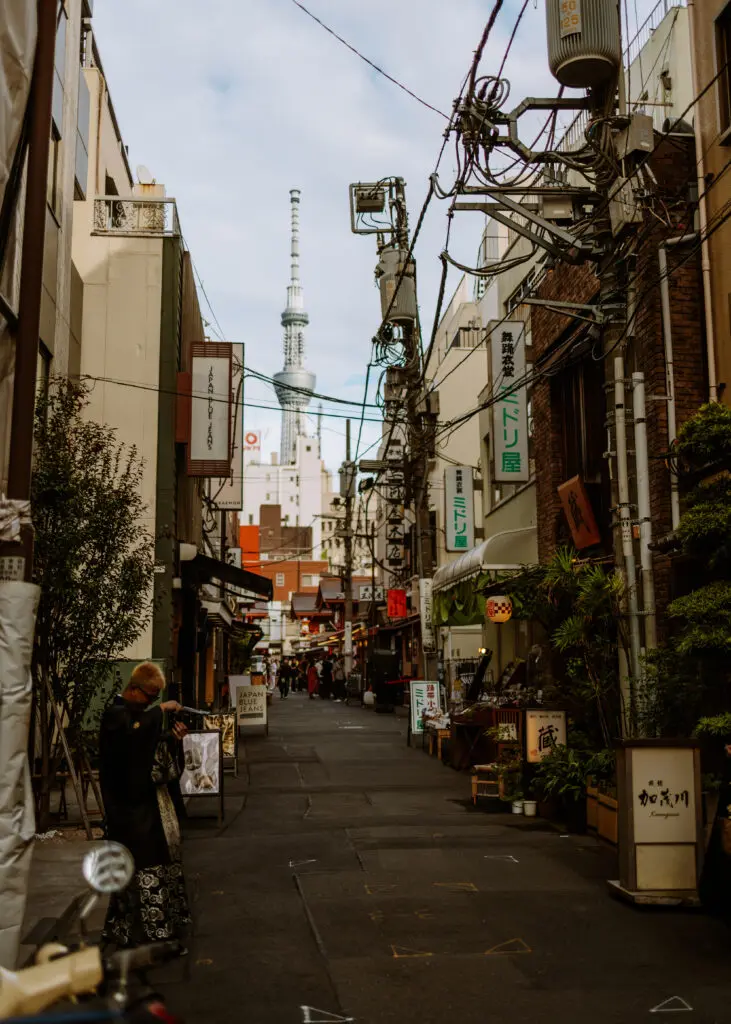
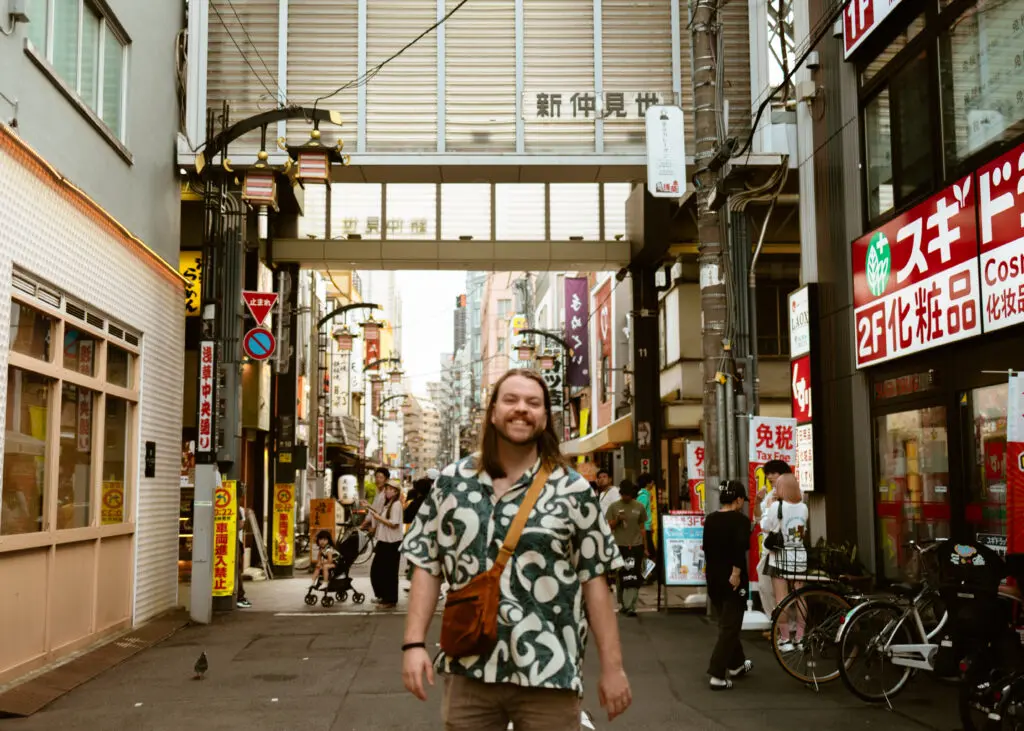
I don’t usually do a lot of shopping when I travel, but Japan changed that… and Asakusa was where we found some of the best stuff! The streets surrounding Sensō-ji are filled with unique little shops selling everything from hand-dyed textiles to Japanese knifes and pottery. I honestly wish I had even more time to shop here… I could decorate my entire house if I only had room in my suitcase!
The shop we bought the most from was Suiren, a small shop with a variety of locally-made goodies, including t-shirts that my husband bought and wore nearly everyday for the rest of our Japan trip, plus some beautiful chopsticks, hand towels, and more!
In addition to the small artisanal shops, there are also bigger stores a short walk away, like Uniqlo and Don Quijote. And if you work up an appetite, check out Hoppy Dori street, home to a variety of izakayas that all serve Hoppy, a beer-like beverage with low alcohol content. Keep in mind that these izakayas usually charge a cover fee!
(Oh, and for a little treat, check out Hatoya’s Vegan Fruit Sandwiches… the strawberry one tastes like strawberry shortcake, my favorite dessert!)
Optional: Thai Massage
One of the highlights of our time in Asakusa was getting a couples massage at Rung Vipa Thai Massage & Spa.
They had availability right away and treated us with one of the best massages we’ve ever had in the most peaceful little massage studio. It cost us ¥8,800 ($57) each for the 60-minute oil massage, and we were offered tea before the massage and gifted a little Thai elephant charm afterward!
Sumida River and Asahi Sky Room
Next, cross the Sumida River and head to the Asahi Sky Room where you can sip Asahi beer while overlooking the sparkling city below! We did this at night and spent about an hour at the sky room, but I’m sure it would be lovely in the day, too.
Although the sky room isn’t as high up as the observation room at nearby SkyTree Tower, the view is exceptional—maybe even better, since you get a closer view of what’s below you! Depending on where you sit, you’ll get to gaze down at Sensō-ji Temple, river boats floating along the Sumida River, Asakusa’s vibrant Kaminarimon Dori street, and get a close-up view of nearby Skytree Tower.
There is no entry fee, just purchase a beer (or another drink) and maybe a snack or two. There was a short wait for a seat when we arrived (maybe 10 minutes?) but it was totally worth it! Oh, and the view from the bathroom is also stunning, check it out!
Just outside Asahi building there’s a walk along the Sumida river, and Sumida Park! When we were here they were playing a movie in the park.
🍺 What’s that giant golden… poop? There’s a giant golden structure on top of one of the Asahi buildings right next to the Asahi headquarters (where the Sky Room is located). It’s supposed to be the foam on top of a beer, but many locals know it as the golden turd.


Day 3: Ueno Park, Yanaka & Optional Traditional Boat Tour
Day three in Tokyo is perhaps my favorite day! We get to explore the lesser known neighborhood of Yanaka, full of artisan shops, cat statues, shrines, and if you’re lucky like we were, vintage markets! Along the way, wander through Ueno Park, and spend your evening floating through Tokyo Bay on a traditional party boat lit by paper lanterns.

Ueno Park Lotus Ponds, Shrines & More
📍Start: Ueno Station | ~6 minutes from Asakusa Station on the Ginza Line
Ueno Park was meant to be a little pit-stop on our way to Yanaka, but we ended up loving our time here! Somewhat surprisingly, we started at Starbucks in Ueno Park… because it’s one of the few places to grab breakfast at 8am (and they have vegan options!)
From there, we walked toward Shinobazu Pond Bentendo, a small Buddhist temple in the middle of a pond surrounded by thousands of lotus plants! (Bonus, if you visit in the summertime you might get to see the lotus flowers in bloom!)
There are plenty of other things to do in Ueno Park, too, like walking under the torii gates at nearby Gojoten and Hanazono Inari Shrines, visiting the Tokyo National Museum or Tokyo Metropolitan Art Museum, or sipping tea at the Tohaku Cha-kan traditional tea house.


Walking to Yanaka: Cafe in an Old Bathhouse & Nezu Shrine
A ten-minute walk through side streets lined with Edo-period homes (depending on where you’re coming from in Ueno Park) will lead you to Miyano-Yu, a charming cafe inside an old neighborhood bathhouse!
And ahhhh, this is the type of travel I love… slowing down and sipping some tasty in a cafe surrounded by locals. Most of the other folks in Miyano-Yu seemed to be students from nearby University of Tokyo, and we only saw one other tourist couple come in during our 45-minutes there.
We both ordered iced matcha lattes and sat on the tatami mat floor seating and snapped a few pictures while enjoying our drinks.
Next, we walked six minutes further to Nezu Shrine, a small Shinto shrine with lines of vibrant red torii gates reminiscent of those thousands of gates at Fushimi Inrari in Kyoto!
And if you’re visiting in April or May, you might catch the annual Azalea Festival here when over 3,000 azaleas (and 100 varieties) are in bloom.


Yanaka Ginza Shopping Street
Walk 10-minutes further toward Yanaka Ginza street, which ended up being another one of our favorite places for shopping in Tokyo!
Yanaka Ginza is a 1950’s shopping street full of local shops (rather than international brands), small eateries, and dozens of cat statues! It certainly gets crowded, but is nothing like the busy streets of Shibuya or Shinjuku.
One of our favorite finds was Hinomoto Canvas where we bought my husband a handmade canvas sling bag that he used for the rest of the trip. There’s also Midoriya for bamboo handicrafts, Togijin for Japanese knives, and so much more!
Make sure you walk all the way up the Yuyake Dandan (Sunset Stairs) at the end of Yanaka Ginza for an iconic view reminiscent of a scene from the famous anime Your Name (though that scene actually was modeled after the stairs up to Suga Shrine, not Yuyake Dandan!)


Temples, Shrines, Cemetery & Maybe a Flea Market
As we left Yanaka’s shopping street we stumbled upon a vintage market at nearby Enmei-in Temple—check the dates for the market here! There are about 45 vendors packed into the temple’s tiny courtyard.
And there are literally hundreds of shrines and temples around the Yanaka area, so if you have time, I’d get off the beaten path and explore! The 25-acre Yanaka Cemetery is also nearby, home to over 7,000 graves and surrounded by dense foliage.
Another place on our list was SCAI The Bathhouse, an art gallery in an old bathhouse, but it was closed when we were visiting!
🥟 Lunch Options: Head to Kayaba Coffee to eat sitting on the tatami mat floor (not vegan-friendly, sadly), Tofu Room Dy’s for homemade tofu and fresh salads, or Vegan Gyoza to try a set of 11 flavor-packed veggie gyoza—it was my husband’s favorite meal in Japan!
Optional: Yakatabune Dinner Cruise
End your last night in Tokyo with an enchanting cruise along the bay aboard a yakatabune, a traditional Japanese party boat lit by glowing lanterns, that feels like its straight out of Spirited Away!
For around $43 per person, you’ll enjoy a sukiyaki (hot pot) dinner, live shamisen music, and views of Tokyo’s skyline while cruising along Tokyo Bay and Sumida River. If you have dietary restrictions like me, make sure to request a special meal when you make your reservation!
More Japan Travel Guides
- What You NEED to Book in Advance for Japan (And How)
- A Dreamy 10 Day Japan Itinerary: Tokyo, Kyoto & Countryside
- 11 Tokyo Hidden Gems for Exploring off the Beaten Path
- The PERFECT 2 Day Kyoto Itinerary: Hidden Gems & Highlights
- 7 Charming Ryokans & Unique Hotels in Asakusa, Tokyo
- The BEST of Fushimi Inari Shrine: A Local’s Hidden Trails & History
- Where to Stay in Tokyo for First Timers: Convenience & Charm
Save this article for later on Pinterest:


