Where to Stay in Tokyo for First Timers: Convenience & Charm
Ahhhh, welcome to the largest city in the world—home to those chaotic street crossings and seemingly endless skyscrapers, but also to serene historic neighborhoods that feel straight out of a movie.
Figuring out where to stay in Tokyo isn’t just about which neighborhood fits your vibe, its also about basing yourself somewhere convenient to explore this giant metropolis—and likely retreat to after a long international flight here.
After visiting Tokyo a handful of times now, I’m sharing my top three recommended areas to stay in the city, based on your interests and which airport you’re flying in/out of. Plus, the best Tokyo hotels and ryokans in each neighborhood, including the ones I’ve stayed at and LOVED! Can’t wait to share, let’s jump into it!!
📍 Quick Recommendations: Where to Stay in Tokyo
- ⛩️ Where I stayed in Tokyo and LOVED it: Ryokan Asakusa Shigetsu
- ✈️ If you want to be close to the airport before a flight:
- Close to Narita Airport: Wakamatsu Honten
- Close to Haneda Airport: Mercure Tokyo Haneda Airport
- ✨ Luxurious options: Cyashitsu Ryokan Asakusa, TRUNK(HOTEL) YOYOGI PARK and The Aoyama Grand Hotel

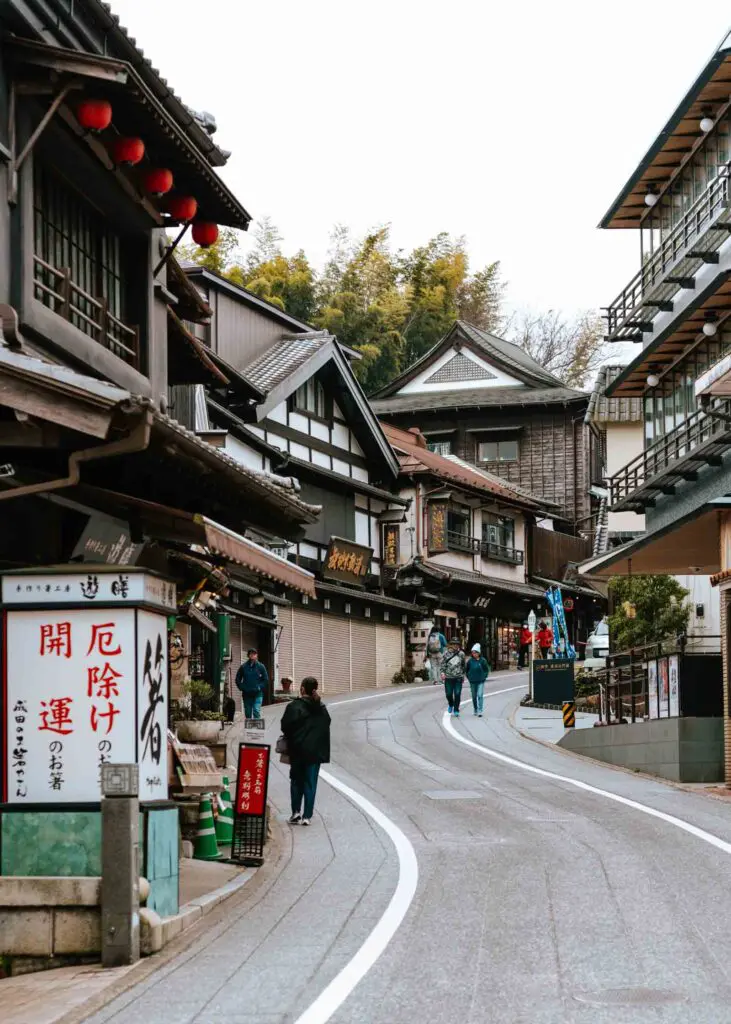

Snapshots of some of the best areas to stay in Tokyo for first timers: Shinjuku, Narita, and Asakusa
Best Tokyo Hotels & Ryokans by Area
As you discern where to stay in Tokyo, here’s a few considerations to think about:
- Do you prefer Shinjuku & Shibuya or somewhere quieter? If you’re you traveling to Tokyo for anime culture, big flashy billboards, and nightlife, you may want to base yourself in Shinjuku or Shibuya. If, like me, you feel more at home exploring temples and historic streets, Asakusa is a great choice.
- Should you stay at a Ryokan in Tokyo? Ryokans are traditional Japanese inns that typically offer a higher level of service, traditional tatami floor rooms, and amenities like onsens (baths), Japanese breakfast, and more. I recommend staying in a ryokan at least once during your Japan trip! In Tokyo, you’ll find more ryokans in Asakusa rather than Shibuya and Shinjuku.
- Do you need a Western bed? Although many tourists specifically look for hotels with Western-style beds, I challenge you to give Japanese futon beds a try! I may be biased (I actually sleep on a Japanese bed at home) but I slept very well in Japan, and hotels with traditional beds tend to be a little cheaper!
- How far in advance should you a stay in Tokyo? In all honesty, as soon as possible! Japan is a travel hotspot right now, and even though we were visiting in the ‘off season,’ I was shocked by how many hotels were sold out 6+ months in advance. If you see a place that interests you, book it on Booking.com today—most offer free cancellations if you change your plans and its better to have something reserved now!
Tokyo is gigantic, and you’ll likely end up on some long metro journeys around the city regardless of where you stay.
Also Read: The Perfect 3 Day Tokyo Itinerary: Traditional & Modern
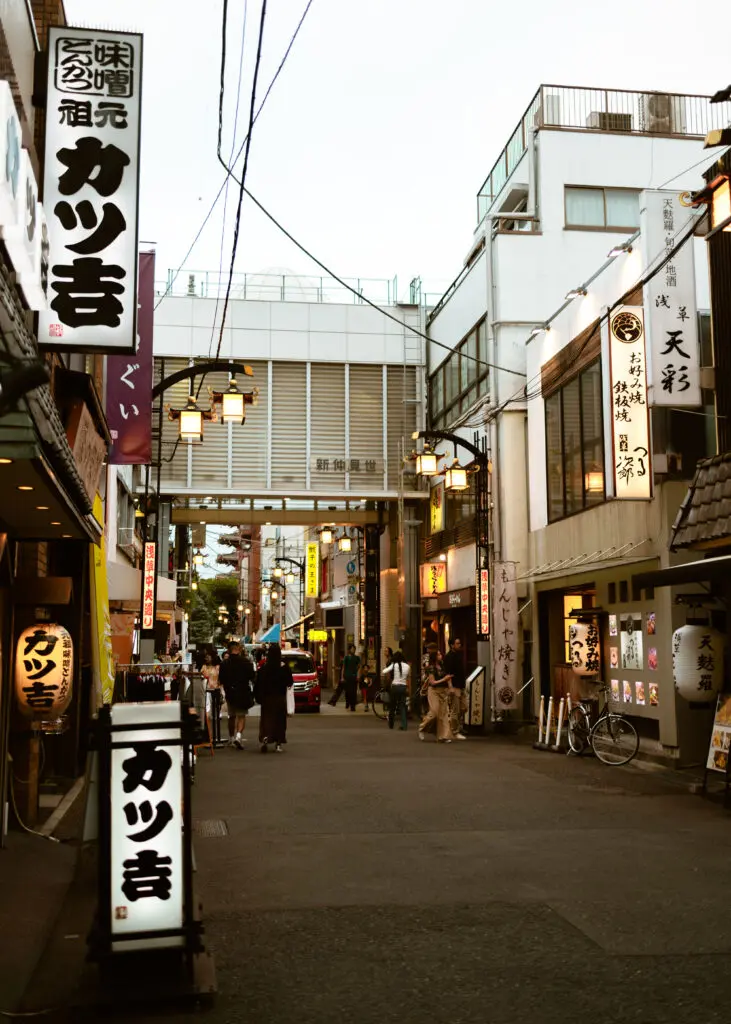
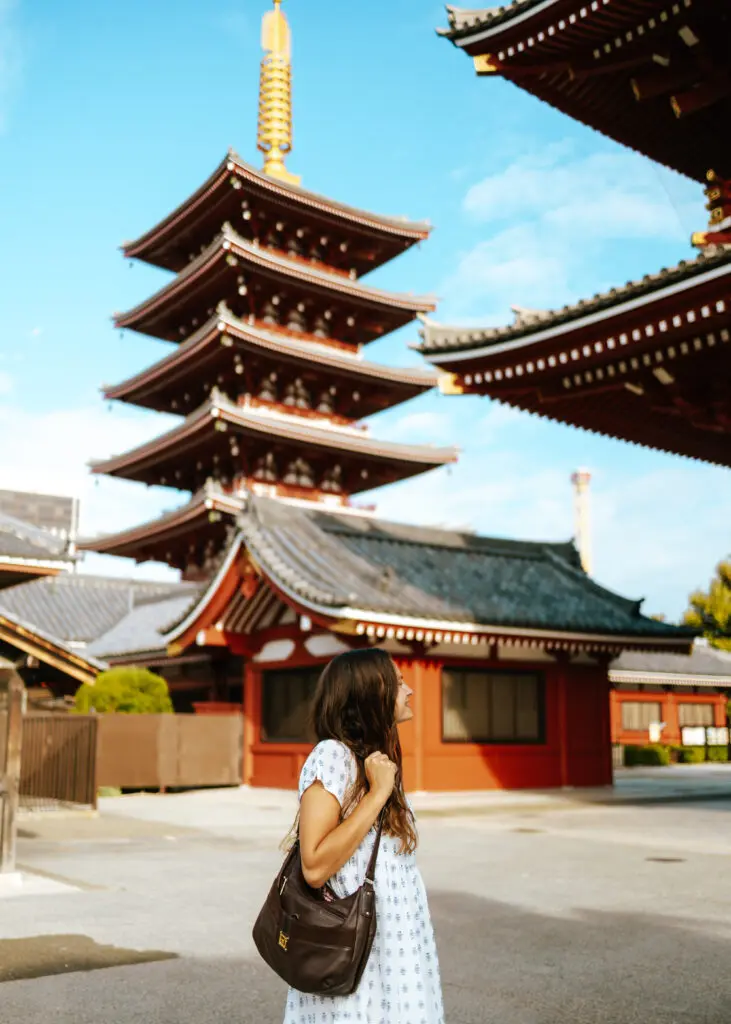

Asakusa for Old Tokyo Charm
Full of peaceful ryokans and boutique hotels with onsens, Asakusa is my personal choice for where to stay in Tokyo, especially if you’re flying in/out of Narita, and especially if you prefer a quieter, more traditional neighborhood over a nightlife area.
- 🎏 Overall vibe: A perfect mix of old & new Tokyo with Sensō-ji Temple, artisan shops, and river walk. Can be crowded around Sensō-ji during the day, but becomes quiet and peaceful after 6pm.
- ⛩️ Things to do: Walk through Tokyo’s oldest Buddhist temple, riverside izakayas, rickshaw ride, sumo shows & more! (check out my full article on the best things to do in Asakusa!)
- 🚆 Convenience factors: Asakusa Station is well connected to all of Tokyo, but admittedly not as well connected as Shinjuku Station (busiest train station in the world!) And Asakusa is almost equal distance between Narita and Haneda airports.
My Favorite Hotels in Asakusa
- Best Budget-Friendly Ryokan in Asakusa: Ryokan Asakusa Shigetsu (where I stayed!!)
- Asakusa Hotel with Best Onsen Facilities: Onyado Nono Asakusa
- Most Luxurious Traditional Ryokan in Asakusa: Cyashitsu Ryokan Asakusa


Shibuya & Shinjuku for Modern Tokyo
Neighboring areas Shibuya and Shinjuku are the beating heart of modern Tokyo with endless activity day and night! If this is the side of Tokyo you’re interested in, stay here, it’s well connected, but quite far from Narita airport.
- 🌆 Overall vibe: Flashy, modern, and wildly crowded with neon billboards, nightlife, and LOTS of shopping. Crowded and a bit chaotic 24/7, which means culture shock in a good way, or a bad way, depending on your personality…
- 🛍️ Things to do: Cross the Shibuya Scramble, go shopping, go to the top of Shibuya Sky, explore Meiji Shrine and Yoyogi Park, izakaya hopping at Golden Gai.
- 🚆 Convenience factors: Shinjuku Station is the most busy train station in the world, so you can go anywhere and everywhere! Though they’re two different neighborhoods, Shibuya and Shinjuku are close by. 40 minute ride from Haneda airport, 1.5 hour from Narita.
My Favorite Hotels in Shinjuku & Shibuya
- Peaceful & Modern Japanese Hotel Overlooking Yoyogi Park: TRUNK(HOTEL) YOYOGI PARK
- Beautiful Michelin-Starred Shibuya Hotel: The Aoyama Grand Hotel
- Budget-Friendly Hotel Beneath GODZILLA: Hotel Gracery Shinjuku
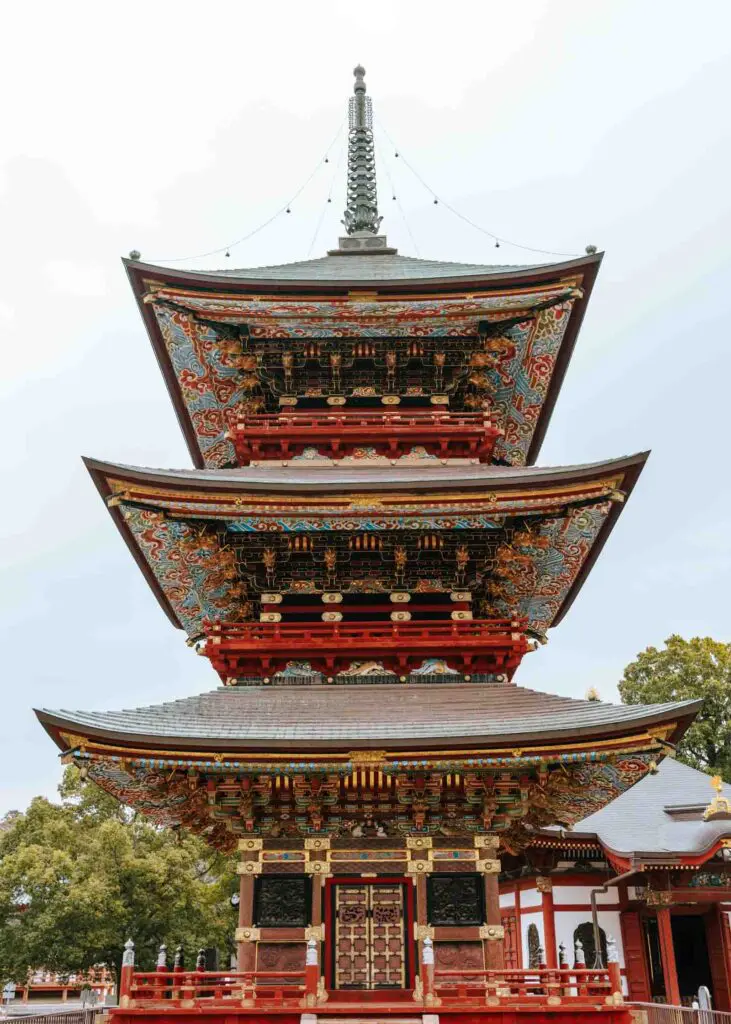
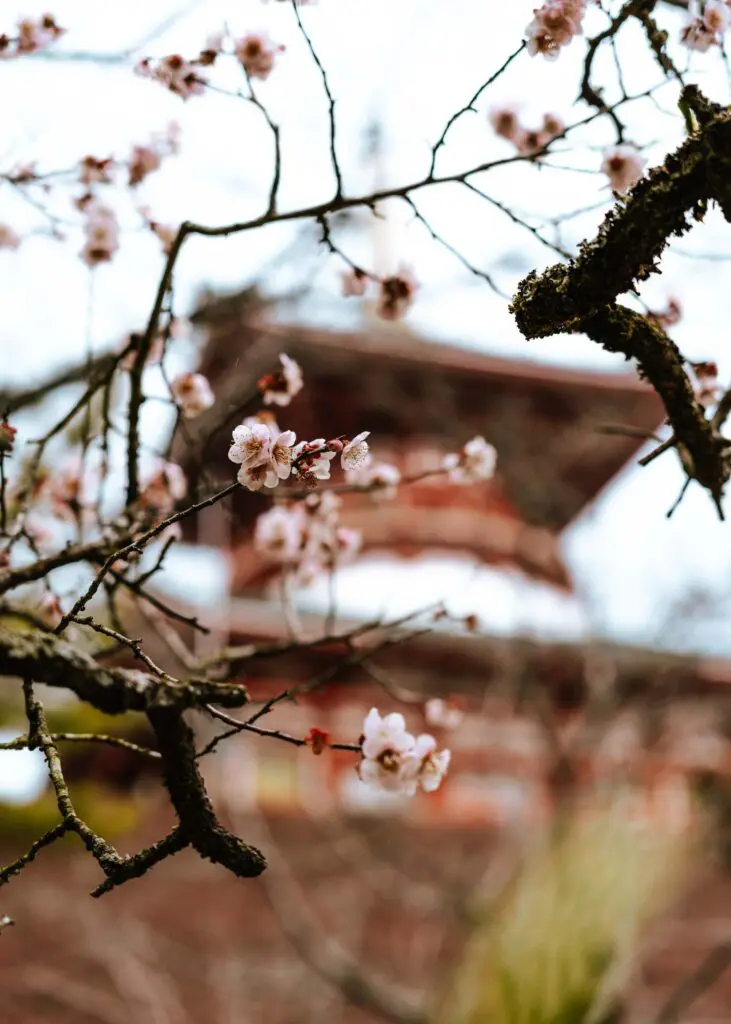
Narita for Airport Convenience & Hidden Gems
If you’re flying into Narita Airport, it’s worth considering spending your first day (or last day) in Narita, a lovely area right next to the airport. My husband explored Narita during a 12-hour layover and fell in love with the Edo-era streets, peaceful gardens, and intricately decorated temples.
- ✨ Overall vibe: Undiscovered historic area that feels like a little Kyoto since it wasn’t destroyed in the war. Most visitors are Japanese, so English isn’t as widely spoken but locals are friendly and helpful!
- 🏯 Things to do: Walk and shop along traditional Omotesando street, visit the stunning temple and gardens at Naritasan Shinsho-ji.
- 🚆 Convenience factors: 15 minute train ride from Narita airport, so it is very convenient if you want somewhere to stay before or after a flight. But Narita is quite far from most Tokyo attractions, so I’d only stay here for one night, then transition to Asakusa or Shibuya.
My Favorite Hotels in Narita
- Exceptional Traditional Hotel with Baths: Waqoo Naritasanmonzen
- Affordable Traditional Ryokan in Historic Narita: Wakamatsu Honten
- Budget-Friendly Rooms & Dorms in Historic Narita: Narita Sando Guesthouse
More Japan Travel Guides
- A Dreamy 10 Day Japan Itinerary: Tokyo, Kyoto & Countryside
- What You NEED to Book in Advance for Japan (And How)
- The PERFECT 2 Day Kyoto Itinerary: Hidden Gems & Highlights
- The BEST of Fushimi Inari Shrine: A Local’s Hidden Trails & History
- 11 Tokyo Hidden Gems for Exploring off the Beaten Path
Save for later on Pinterest:


