7 Things to Know Before Your First Visit to Chichén Itzá
Taking a day trip to Chichén Itzá is one of the most popular things to do if you’re visiting Tulum, Cancun, Playa del Carmen, Merida, or really anywhere on the Yucatán peninsula.
After visiting dozens of Mayan ruins throughout Mexico, Belize, and Guatemala, and I say that this UNESCO World Heritage Site and new Wonder of the World truly does live up to the hype!
But there are several things I wish I’d known before visiting Chichén Itzá for the first time. In this article I’ll go over my top Chichén Itzá tips so you can make the most of your visit!
📌 Bookmark these Mexico travel guides to keep planning your trip:
- 👙 EPIC 3 Day Cancun Itinerary for Adventure Lovers
- ✨ The Perfect Valladolid, Mexico Itinerary: 1-7 Days
- 🏝 My Favorite Cancun Day Trips: Cenotes, Ruins + More
- 🥾 Visiting El Rey Archaeological Zone in Cancun
- 🤿 7 BEST Valladolid Cenotes for Swimming
- ✨ The Ultimate Bacalar Itinerary: 1-7 Days
- 🗺 The Quintessential Mexico City Itinerary
And grab my free map of Mexico’s Yucatan with my all my favorite spots pinned!

This Chichén Itzá photo was taken with my $39 tiny flexible travel tripod—it works for both phones and professional cameras!
Chichén Itzá Tips for First Timers
1. Chichén Itzá is in a different time zone than Cancun, Tulum, and Playa del Carmen
You heard me right—Chichén Itzá is not in the same time zone as Cancun, Tulum, and Playa del Carmen. In fact, it’s not even in the same state!
Chichen Itza is located in the Mexican state of Yucatan, and shares a timezone with Merida on Central Standard Time. Meanwhile, Cancun, Tulum, and Playa del Carmen are in the state of Quintana Roo on Eastern Standard Time.
If you’re visiting Chichen Itza on a day trip from one of those popular towns along the Riviera Maya, be sure to take the time difference into account. Use this time zone converter—you’ll have to select Merida to check the time for Chichen Itza since it’s the closest big city.

This photo shows you just how few people are at Chichen Itza right before it closes!
2. Visit at the end of the day to beat the crowds (and get the best photos)
Most Chichen Itza travel blogs will tell you to arrive early and line up to get into Chichen Itza when it opens at 8:00 am. You have to wait in line, and then the park gets exponentially more crowded—and hotter—the longer you stay.
Instead, I suggest that you arrive around 2:00 or 2:30pm, a few hours before the park closes. Yes, it will still be busy when you arrive, but it’ll get less crowded over time as the day’s visitors trickle out.
You’ll have time to see everything, and then an hour before the park closes, you can get some epic photos in front of El Castillo with no one in the background! Plus, the lighting will be much softer and prettier in the late afternoon compared to in the morning.
Just keep in mind that while Chichen Itza closes at 5pm, the park staff will start to usher you out 30 minutes before it closes. Make sure you budget enough time! Also, check the sunset times so you know whether you’ll have to drive back to your hotel in the dark or not.
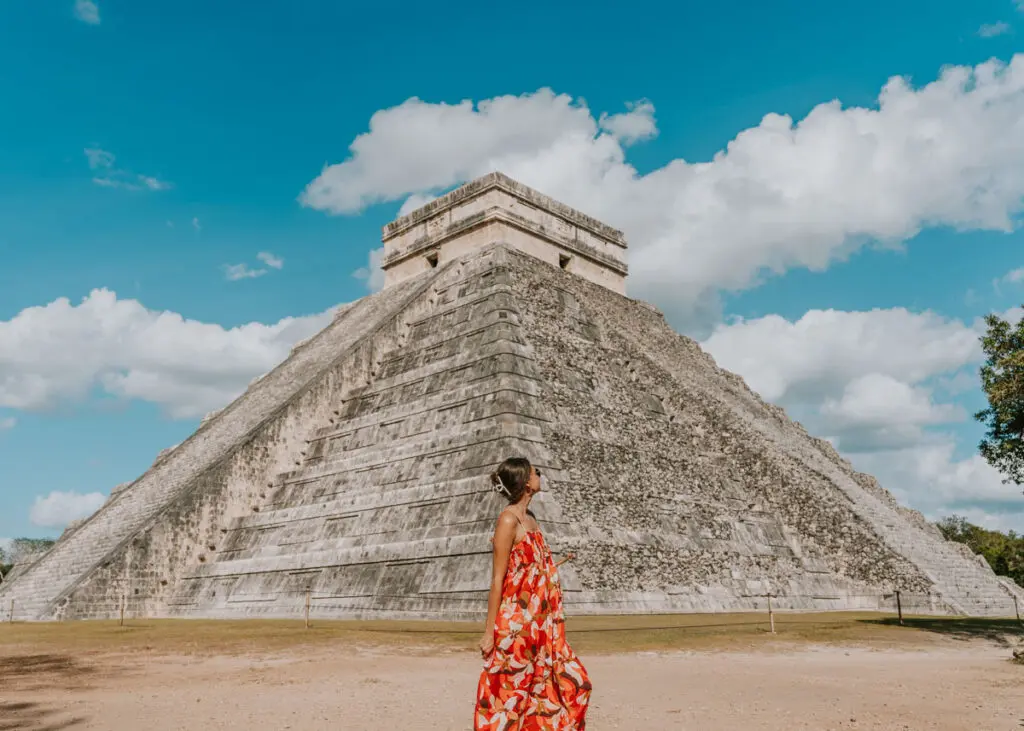
The main sight at Chichén Itzá, El Castillo—also called the Temple of Kukulkan
3. Know a bit of Chichén Itzá history before you arrive
Whether you hire a guide or not, it helps to have an idea of Chichén Itzá’s history before you get there! Here’s a quick overview of the site’s history:
Chichén Itzá was one of the most powerful political, economic, and religious hubs in the ancient Mayan world. And today it’s one of the most well-preserved and striking Mayan archaeological sites out of the thousands of sites throughout southern Mexico and Central America.
The city thrived between the 7th to 10th century AD. It was strategically positioned between Mayan trade routes, and had ties to Toltec civilizations, too. But by the 12th century, Chichen Itza began to decline and was eventually abandoned after the Spanish arrived in the 16th century.
Although it is no longer inhabited, Chichén Itzá is still a significant cultural site today. It’s a UNESCO World Heritage Site and one of the new Seven Wonders of the World. As many as 2.5 million people visit Chichen Itza each year, making one of the most-visited Mayan sites, along with the Tulum ruins in Quintana Roo.
And despite everything that’s happened since Mexico was colonized, the descendants of Chichén Itzá are still around today! Check out this interesting article about how researchers have linked human remains from Chichén Itzá to living Mayan communities nearby.
✨ Chichén Itzá tip: You can hire a tour guide when you arrive onsite, or reserve a top-rated guide here!
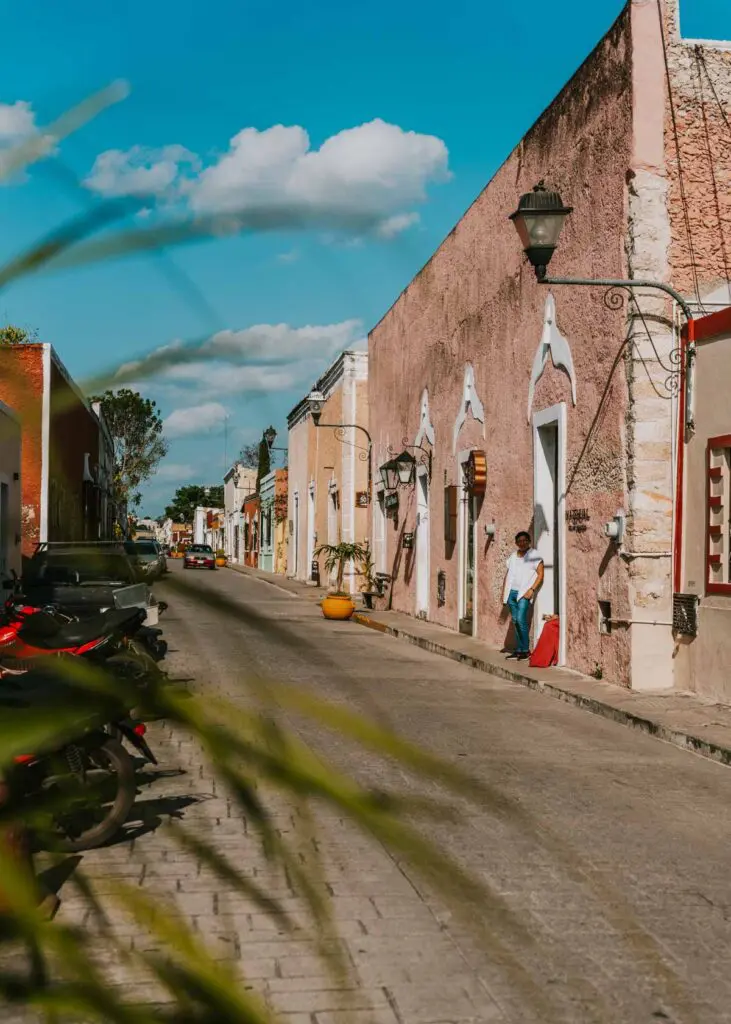
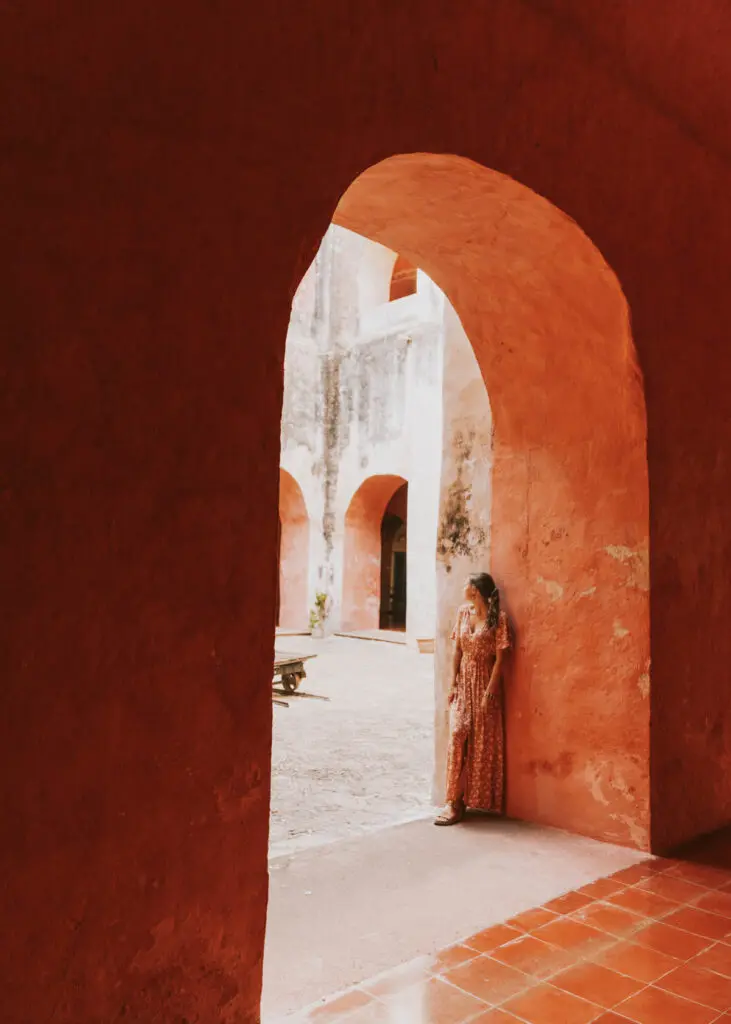

Walk along Valladolid’s Calzada de Los Frailes, which will lead you to the pink convent and my favorite lunch spot!
4. Stop at Valladolid on your way to or from Chichén Itzá
Just thirty minutes from Chichen Itza on the way from Cancun, Playa del Carmen, and Tulum, Valladolid is a must-visit spot on any Chichen Itza day trip! It’s the perfect place to grab lunch or dinner (the food in Valladolid is AMAZING) and there are plenty of other reasons to stop, too!
Valladolid is one of Mexico’s official pueblo magicos, which means the Mexican government has literally classified is a magical town for its historical charm—and with the cobblestone streets, colorful buildings, pink convent, and stunning cathedrals, you’ll see why!
Valladolid also has a cenote (natural swimming hole) just a few blocks from the main square that you can actually swim in for only $60 MXN!
Other things to do in Valladolid include wandering the picturesque Calzada de Los Frailes street, which is lined with vintage shops, cafes, bars, and other locally owned businesses. That street will lead you to the Convento de San Bernardino de Siena, a historic convent that’s painted pink inside! And across the street, you’ll find one of my favorite Valladolid restaurants, Elela Organic Cafe. All of these spots and more are pinned on my free Yucatan map for access on-the-go!
Valladolid is one of my favorite places in Mexico, and it’s actually worth spending a few days here if you have extra time in your Yucatan itinerary. Check out my full Valladolid itinerary to plan a visit.

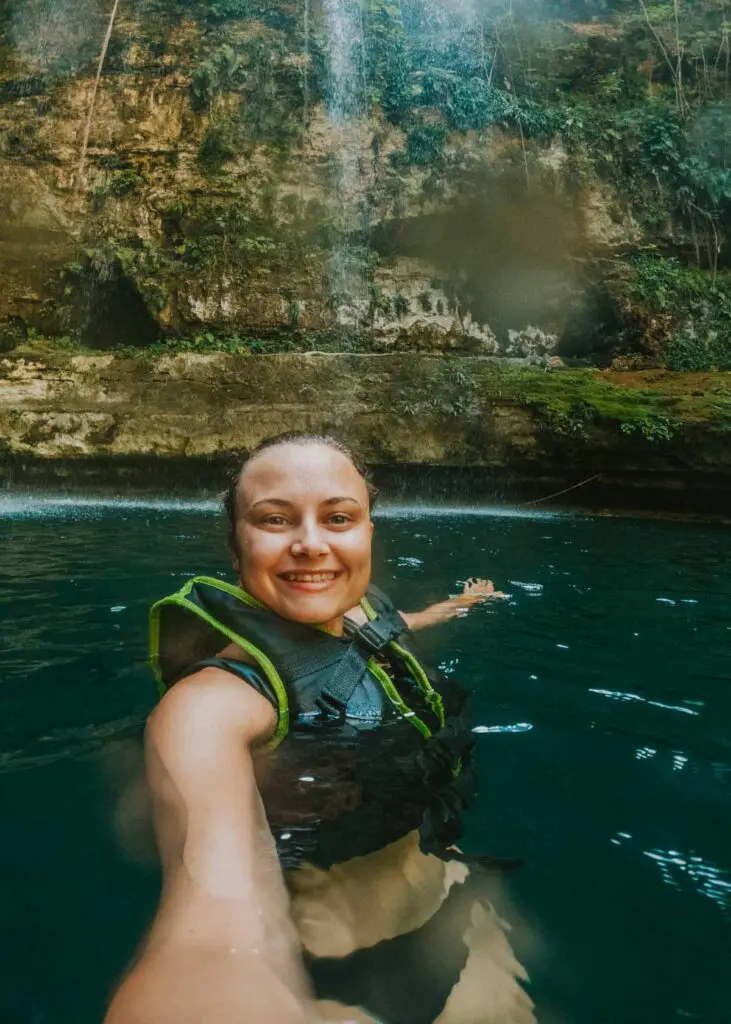
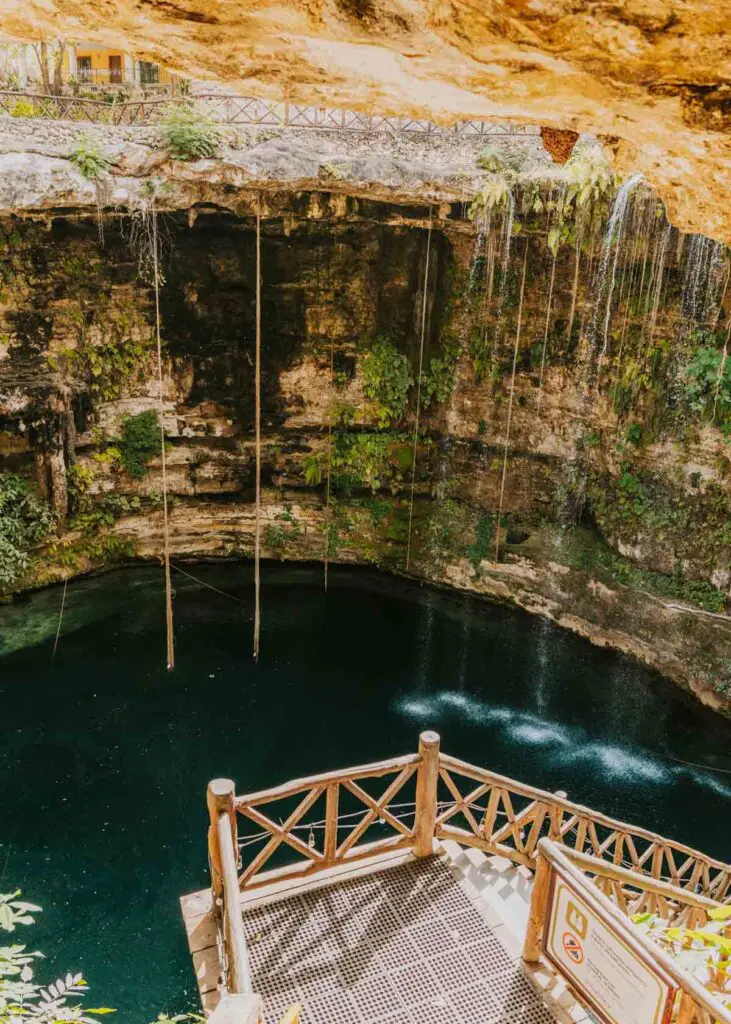
Swimming alone in a cenote is a rare gift! Head to one of the lesser known cenotes or arrive early to get the place to yourself!
5. Chichén Itzá is near some of Mexico’s most beautiful cenotes, so be sure to stop—but avoid the crowded touristy cenotes!
You may have heard that Tulum is home to Mexico’s best cenotes. But after living in Tulum and traveling all around the Yucatan peninsula, I can confidently say that Valladolid has even better cenotes!
Most of the area’s cenotes are stunning open-air caves with an azure pool of refreshing water surrounded by dangling vines, plus jumping platforms and rope swings.
And taking a dip in one of these breathtaking natural swimming holes is the perfect way to cool off on a Chichen Itza day trip! Thankfully, there are dozens of cenotes located along the drive to Chichen Itza, mostly around the Valladolid area.
But not all Valladolid’s cenotes are equal! I’d personally steer clear of the more touristy cenotes (like Cenote Ik Kil and Cenote Suytun) as swimming with crowds of people isn’t as enjoyable.
About 30 minutes northeast of Valladolid you’ll find my two favorite cenotes. Cenote Xcanahaltun ($200 MXN per person) is the most beautiful cenote I’ve ever seen, with pristine turquoise water and breathtaking chandelier stalactites. A short drive down the road, Cenote Secreto Maya ($250 MXN per person) is an open-air cenote with vibrant blue water, hanging vines and green foliage, several cliff jumping platforms and a rope swing. Just keep in mind that these cenotes are a little off the beaten path and take longer to get to!
Closer along the highway between Valladolid and Chichen Itza you can visit the stunning open-air Cenote Saamal ($200 MXN per person) and nearby two cave cenotes at Cenotes Xkeken ($226 MXN per person). Since they’re so convenient, these cenotes do get quite a bit busier, so try to visit in the early morning!
Check out my detailed guide to the best cenotes in Valladolid, Mexico for more options!
🌊 What in the world is a CENOTE? A cenote is a natural sinkhole filled with water, formed formed as limestone bedrock collapses over time and exposes groundwater. The Yucatan peninsula is home to over 6,000 cenotes and they’re connected by underground rivers! Each cenote is unique, but they usually fall into three categories: open cenotes which resemble a small lake, covered/cave cenotes that are underground, and semi-open cenotes that are a mix of the two.
6. Chichén Itzá tours from Cancun, Tulum, Merida, and Playa del Carmen are surprisingly affordable… but you often get what you pay for
It costs as little as $29 USD for a highly-rated day trip to Chichen Itza with roundtrip transportation, plus a stop in Valladolid and at a cenote!
But keep in mind that these budget-friendly tours from Cancun, Tulum, Merida, and Playa del Carmen are usually on a big busses, may not include a guided tour of Chichen Itza, and only stop at the touristy cenotes. That said, I can see why a tour like this could be worth it if you’re on a strict budget!
And if you’d prefer a smaller group tour, there are plenty of other Chichen Itza tours (browse and sort tour options here). Look for a highly-rated tour with stops at a cenote and Valladolid.
If you’re overwhelmed by all the tour options, this small-group Chichen Itza day trip is my top pick! It includes guided walk through the archaeological site, two whole hours to explore Valladolid, and a visit to Cenote Xux Ha, a lesser-known cenote where you can enjoy an hour of swimming without all the crowds of the more popular cenotes.
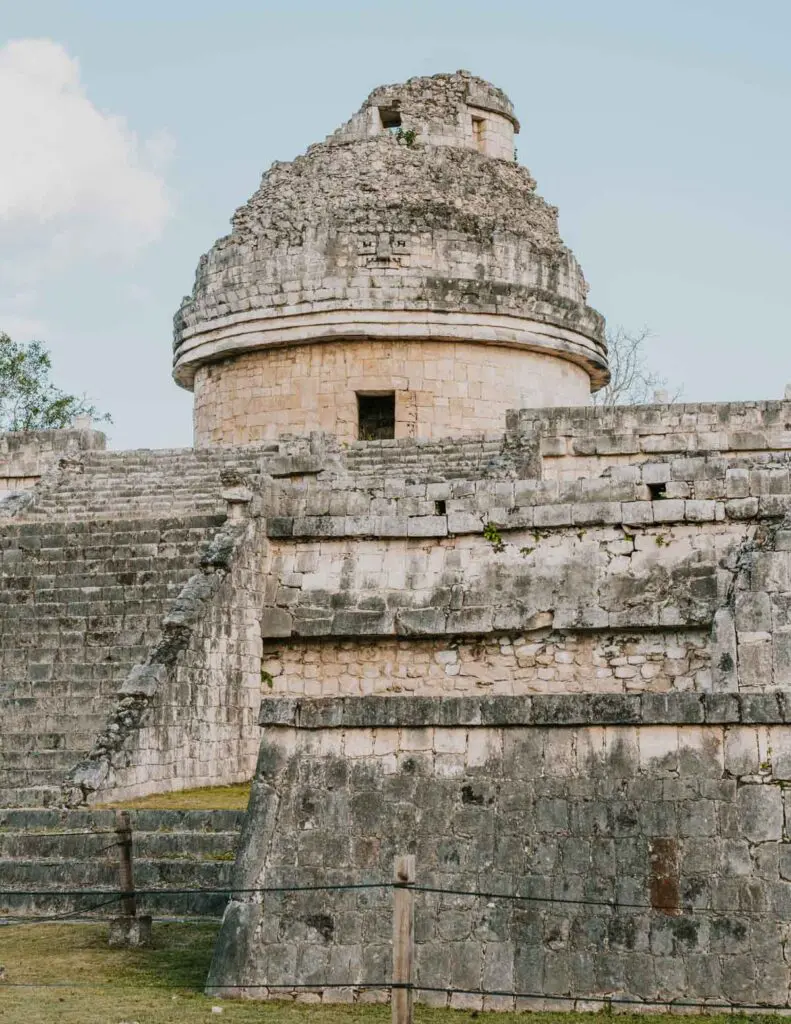
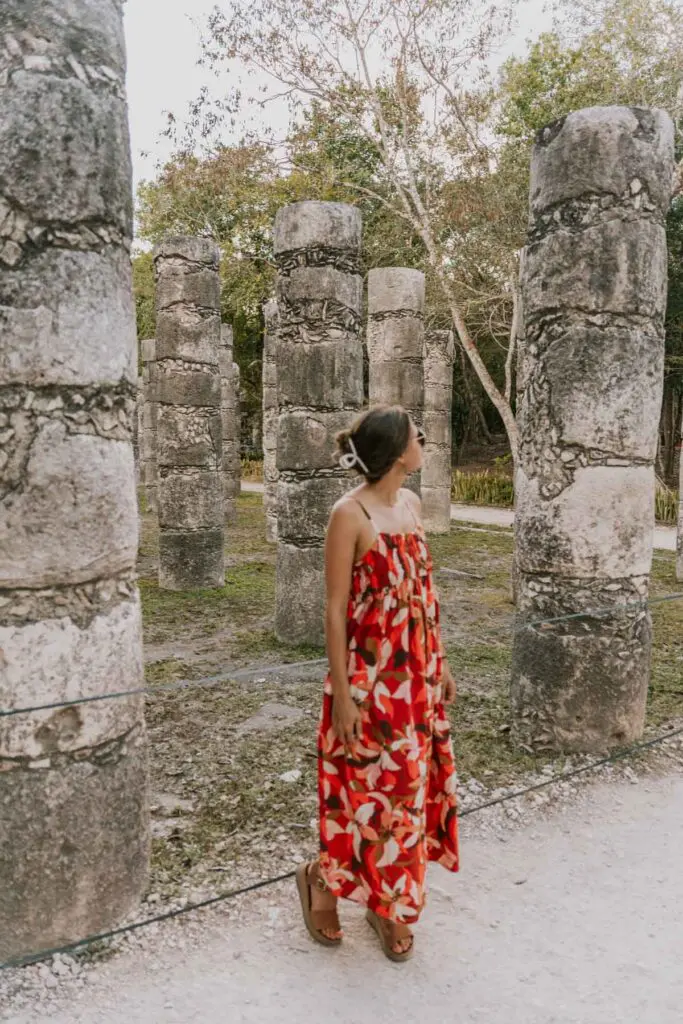

A few of the many sights to see at Chichén Itzá beyond the famous Chichén Itzá pyramid!
7. El Castillo is just as stunning in person as in the photos, and there’s plenty more to see!
Here’s a quick overview of all the best sites to see at Chichen Itza:
- El Castillo (Temple of Kukulkan): The iconic main pyramid is about 100 feet high, with 365 steps to represent the days of the year. It was built in 9th century for the Mayan serpent god, Kukulkan. Amazingly, the sunlight on the spring equinox each year creates a shadow of serpent descending the temple’s stairs (see a video of it here). 🤯
- Temple of the Warriors: Another stunning temple, surrounded by hundreds of columns. Anthropologists don’t quite understand the purpose of these columns, but the temple itself was built in the 10th century, also for Kukulkan.
- The Observatory (El Caracol): Chichen Itza’s astronomical observatory is one of the few circular structures in the Mayan world.
- Sacred Cenote (Cenote Sagrado): The ancient Mayans of Chichen Itza made sacrifices to their gods in this green cenote. Archaogilists have recovered the remains of hundreds of humans, ceramics, jewels, and gold. Here’s an facinating article about recent DNA findings from the sacrifice victims.
- The Ball Court: Chichen Itza is home to Mesoamerica’s largest ball court! It was built for the ball game Pok Ta Pok, which was played all over the Mayan world—and is played in many Mexican cities today, too! Read about Pok Ta Pok here.
Keep planning your Mexico travels
Here are some more Mexico travel guides to help you plan your Yucatan adventures and explorations across other parts of this beautiful country! And you can browse all my Mexico travel guides here.
- 👙 EPIC 3 Day Cancun Itinerary for Adventure Lovers
- ✨ The Ultimate Bacalar Itinerary: 1-7 Days
- 💸 17 Amazing Cheap Things to Do in Tulum on a Budget
- 🐢 How to Visit Xcacel Beach Turtle Sanctuary Near Tulum
- 🗺 Mexico City in 4 Days: The Quintessential CDMX Itinerary
- 🇲🇽 The Perfect Oaxaca City Itinerary: 3-10 Days
- ☀️ 12 Cancun Hidden Gems: Cancun Off The Beaten Path
Save this article for later on Pinterest:


