10 Day Southern Italy Itinerary: Beaches, Mountains & More
Last September my husband and I spent ten days galavanting around southern Italy—eating as much focaccia as we could, swimming in the sparkling Mediterranean, sipping organic wine under the watch of Mt. Vesuvius, zip-lining from one town to another in the southern Dolomites and visiting the sweet small town my great-great grandfather was from.
It was my first trip back to Italy after living here seven years ago, and my husband Josh’s first introduction to the country—and the perfect Euro summer for both of us.
If you’re also planning a trip to southern Italy, I hope my carefully designed itinerary inspires you! We spent half our time beside the glistening Bay of Naples where we jetted along the Amalfi Coast, visited Pompeii, and ate some of the world’s best pizza.
Then we journeyed through the center of southern Italy and stopped at two breathtaking towns along the way (keep reading if you want to find out about these!) We spent the rest of our trip exploring the Adriatic beaches and white-washed towns of Puglia—heel of the boot of Italy!
This itinerary is designed for curious, culture-loving travelers who want to experience slow paced life in southern Italy with a mix of archaeological sites, wine tastings, beaches, cobblestoned cities, and more. 🇮🇹


Days 1-4: Vico Equense (Amalfi Coast Boat Tour, Mt. Vesuvius Wine Tasting & More)
Spend your first four days exploring all the best spots along the Bay of Naples and Amalfi Coast. Go wine tasting beneath Mt. Vesuvius (and visit Pompeii, of course!), enjoy an adventure-filled boat tour along the famous Amalfi Coast, and soak in the sunshine at local beaches.
We stayed a breathtaking bed and breakfast nestled amongst olive grows overlooking the sparkling blue Bay of Naples and Mt. Vesuvius. This B&B is one of the top places I’ve ever stayed, and it’s located in Vico Equense, a charming little town that happens to be where my great-great-grandfather was from!
Vico Equense blew me away—it hasn’t been impacted by mass tourism, so it maintains its classic Italian charm with a cobblestoned downtown area, terraced olive groves overlooking the Mediterranean, and several uncrowded beaches within walking distance.
And it’s known as the città del gusto (city of taste), aka it’s a foodie destination that has some of the best pizza you’ll ever try. Plus, Vico is where most of the limoncello sold along the Amalfi Coast is actually produced.
And best of all, it’s not very touristy, yet much more conveniently located compared to the Amalfi Coast towns—you can travel directly here on a scenic train ride from Naples in under an hour. (Then, check the Amalfi Coast off your bucket list on a leisurely boat tour that takes you to Positano, Amalfi, and some lovely swimming spots.)
🚊 Getting around Vico Equense & Naples: This area is incredibly easy to get around on the Circumvesuviana train, which runs from Naples to Sorrento (Vico Eqenuse is a few stops before Sorrento). One-way tickets cost under €5 for most routes. Purchase your tickets at the train station and don’t be surprised if the ticket machine breaks…. this happened to us at numerous stations, so I assume it happens somewhat frequently here.
Things to while staying in Vico Equense:
Mt. Vesuvio Wine Tasting
Although you might not think of Naples as a wine tasting region, the fertile slopes of Mt. Vesuvius are home to some incredible family-owned vineyards.
And slowly sipping organic wine while gazing out on the glittering Bay of Naples and towering volcano was one of the highlights of my southern Italy itinerary.
We opted for an organic wine tasting and lunch at family-owned Cantina del Vesuvio, and it ended up being one of the best meals we had during our entire three weeks in Italy.


Full transparency, my husband and I are vegan… which can be difficult in Italy at times, but the lunch at Cantina del Vesuvio was exceptional, with handmade pasta, fresh cherry tomato sauce, aged vegan cheeses, house-made wine vinegar (like balsamic but even better!) and crusty bread.
If you’re looking for a more budget-friendly option, Quirinoli offers a fantastic wine tasting with lunch as well. Of course, I haven’t done this one myself, but raving reviews on Viator make me confident in recommending it.
Both wineries provide complimentary roundtrip transportation from Pompeii, making it incredibly convenient to explore the ruins on the same day.

Explore the Ruins of Pompeii
Even though I studied Roman archaeology in college, I honestly expected Pompeii to be overrated… but I was so wrong!
This massive archaeological site is incredibly well-preserved, thanks to the volcanic ash that buried the town during the catastrophic eruption of Mt. Vesuvius in 79 AD.
The majority of the town is excavated and most of the buildings are still standing, some of which are still adorned with vivid frescoes that give you a glimpse of ancient art.
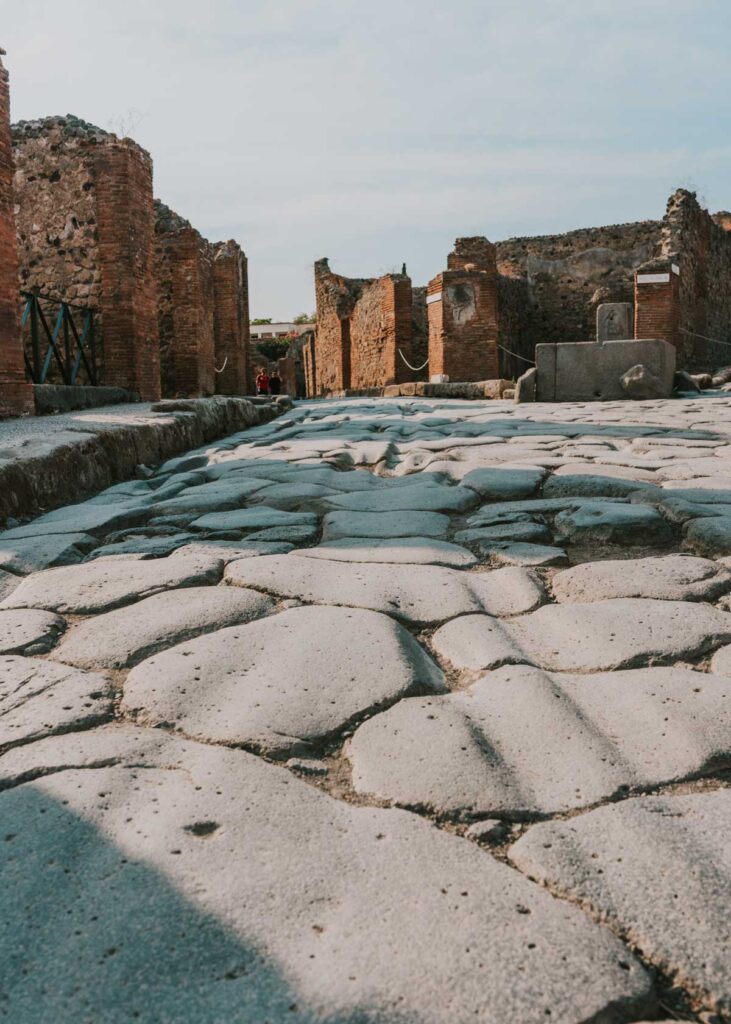
Today, you can stroll the same 2,000-year-old cobblestone streets that the locals once did—only now, you’re not bound by the restrains of ancient social structures.
In just a few hours, you can wander through the ruins of family homes, bakeries, brothels, bathhouses, and piazzas, and also explore the fresco-adorned residences of Pompeii’s wealthiest merchants and political leaders.
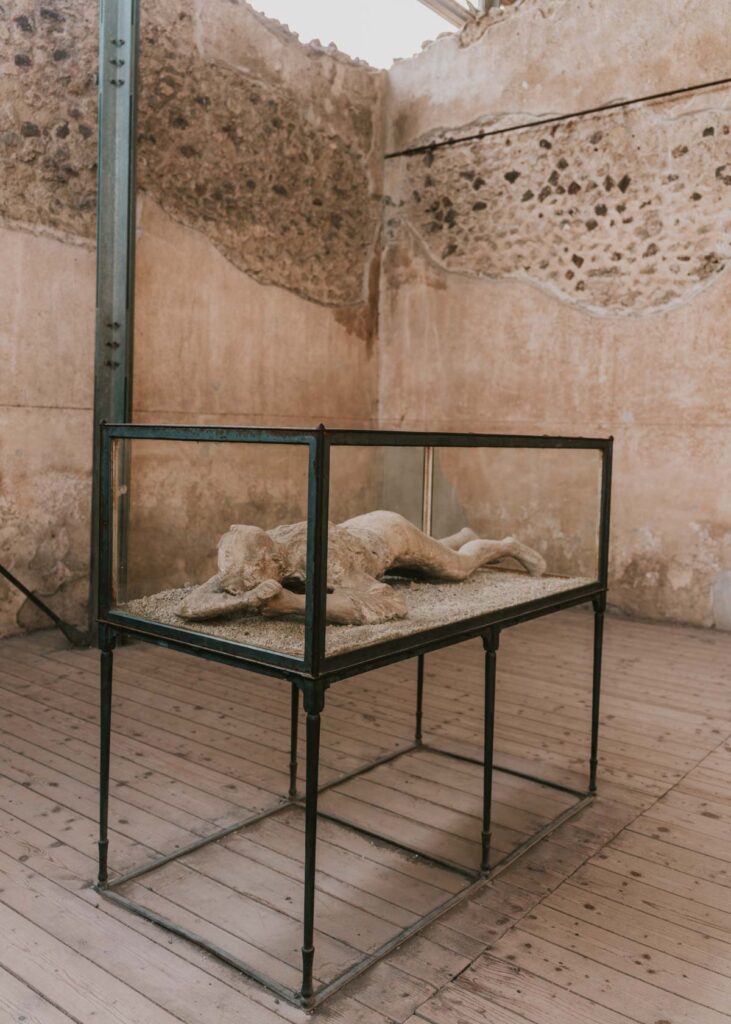
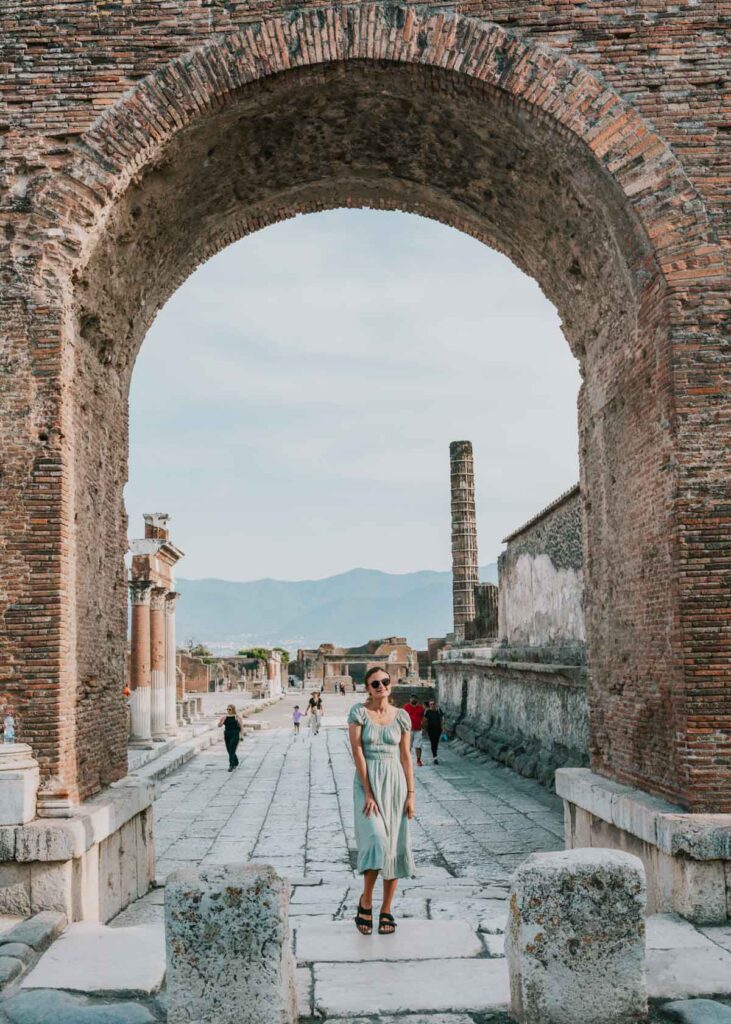
There’s something incredibly intimate about stepping into the lives of people frozen in time. But it’s also haunting when you encounter the eerie casts Pompeii’s victims, preserved in their final moments.
We listen to part of the free audio tour from the Rick Steve’s app, but if you can afford it, I’d actually recommend touring Pomepii with a guide becuase we found it difficult to keep on track with an audio guide in such a large archaeological site!
We visited spontaneously after our dreamy Mt. Vesuvius wine tasting when we realized that we could get in for free since it was the first Sunday of the month! But if you don’t just happen to find yourself outside of Pompeii on the first Sunday of the month, check current entry prices and opening hours here.
There is a train station right across the street from Pompeii, and you can take the 25-minute train directly from Vico Equense (or from Sorrento and Naples) for about €3.80. Be sure to also do wine tasting in the are while you’re here!

Amalfi Coast Boat Tour
Home to a string of picture-perfect villages etched into rugged cliffsides, the Amalfi Coast exudes a vintage luxury feel that attracts over 5 million visitors each year. 🤯
Vico Equense is only a few miles (as the crow flies) from Positano, but it can take a nasyueating hour to get there along the treacherous, traffic-ridden winding roads.
Since the stunning coastline is such a large part of the appeal of visiting the thirteen towns here, taking an Amalfi Coast boat tour is a no-brainer.
Although I was suspicious that it would be a bit overrated, my husband and I thoroughly enjoyed our full day boat tour of the Amalfi Coast!
We docked in both Amalfi and Positano with plenty of time to explore the highlights of both cities, and stopped to swim the Li Galli islands (lore tells us this is where Ulysses encountered the sirens) and some beautiful sea caves.
Also See: 5 BEST Amalfi Coast Tours from Sorrento
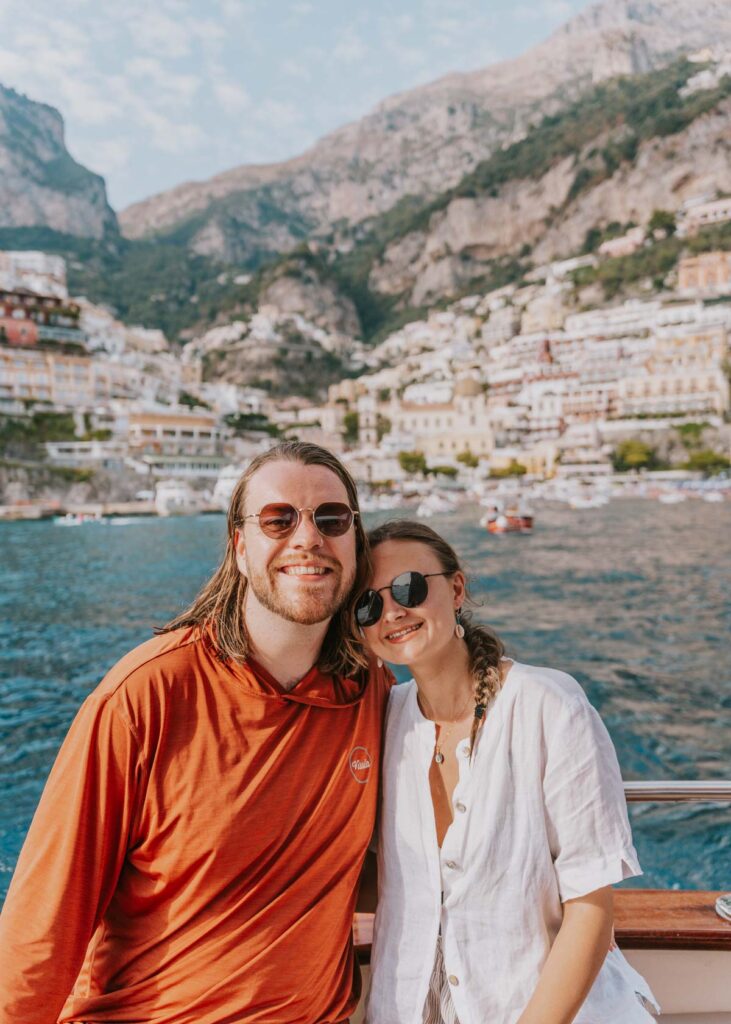


If you’re like me, you might wonder if the Amalfi Coast is actually worth visiting given how busy and touristy it can be these days. I was expecting both towns we visited to be utterly packed with tourists—and they were. But I still enjoyed the time we spent wandering these towns on foot—and also enjoyed our snorkeling spots along the way.
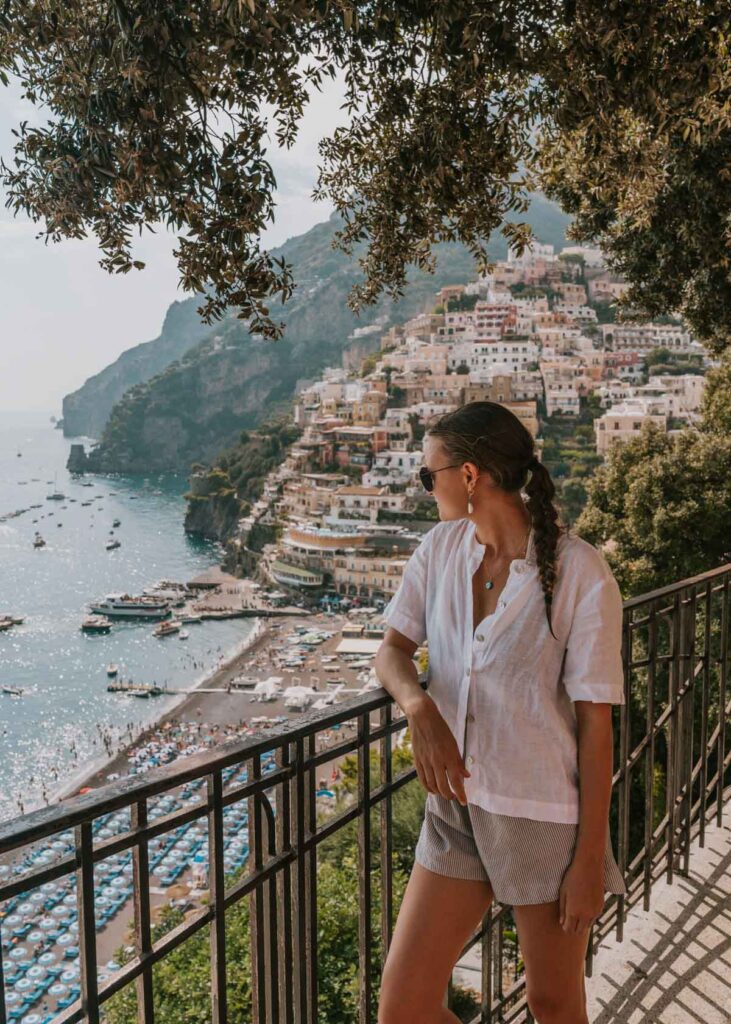
In Amalfi we visited the Cathedral of Saint Andrew, where ancient relics from the apostle are stored. In Positano we climbed the steep cobblestoned streets to an overlook where we got one of those postcard-worthy Amalfi Coast views, and ate some delectable lemon sorbetto.
It felt like the perfect amount of time to get a taste of these iconic towns and left us plenty more time in our itinerary to explore other lesser-known areas of southern Italy.
Explore Vico Equense
There are so many excellent day trips from Vico Equense, but this sweet little town also has plenty to offer! The downtown area is small, but charming and uncrowded, and I highly recommend wandering around.
Along the way, you’ll spot towering Gothic churches like the 14th century Chiesa della Santissima Annunziata, and visit viewpoints where you can gaze out on the Mediterranean and Mt. Vesuvius.
There was even a celebration and procession through the streets from a small local Catholic Church while we were in town!

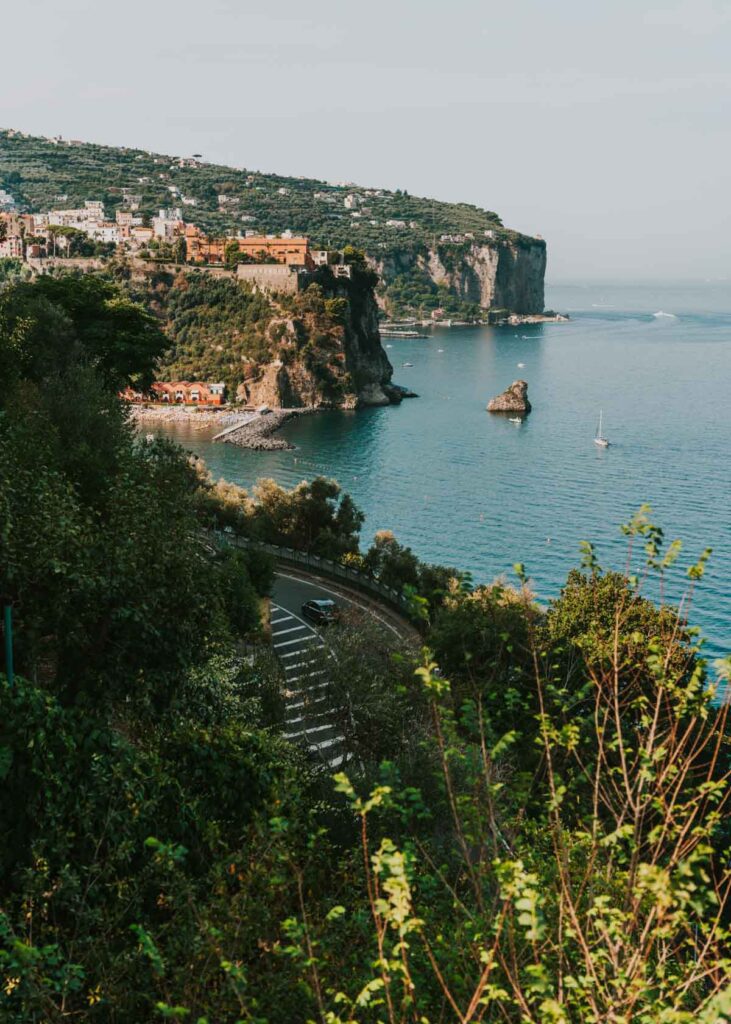

Whatever you do, be sure to stop by L’Università della Pizza (literally the University of Pizza) for some of the best pizza you’ll ever have—served by the meter!! Il Barrio Osteria is another great place to eat in town, with a lovely atmosphere in a cute courtyard.
Another one of the best things to do in Vico Equnese is go to the beach! We spent several hours at Lido Da Vittorio, a little beach club with a retro feel. It’s technically walking distance from the town, but there’s also a little bus that will take you up and down the hill from the train station!
Vico Equense is also home to a few museums, including Museo Mineralogico Campano where you’ll find a collection of fossils in an old convent. Plus, two art small museums, Museo Aperto Antonio Asturi and Museo Bottega Affreschi Aerma Polani.
Day Trip to Naples
The birthplace of pizza and the third largest city in Italy, Napoli is a little rough around the edges, but still makes an excellent day trip while you’re in the area.
You can reach the center of Naples in about an hour on the train from Vico Equense. Although you can explore on your own, many people prefer to navigate this chaotic in-your-face city on a group walking tour.
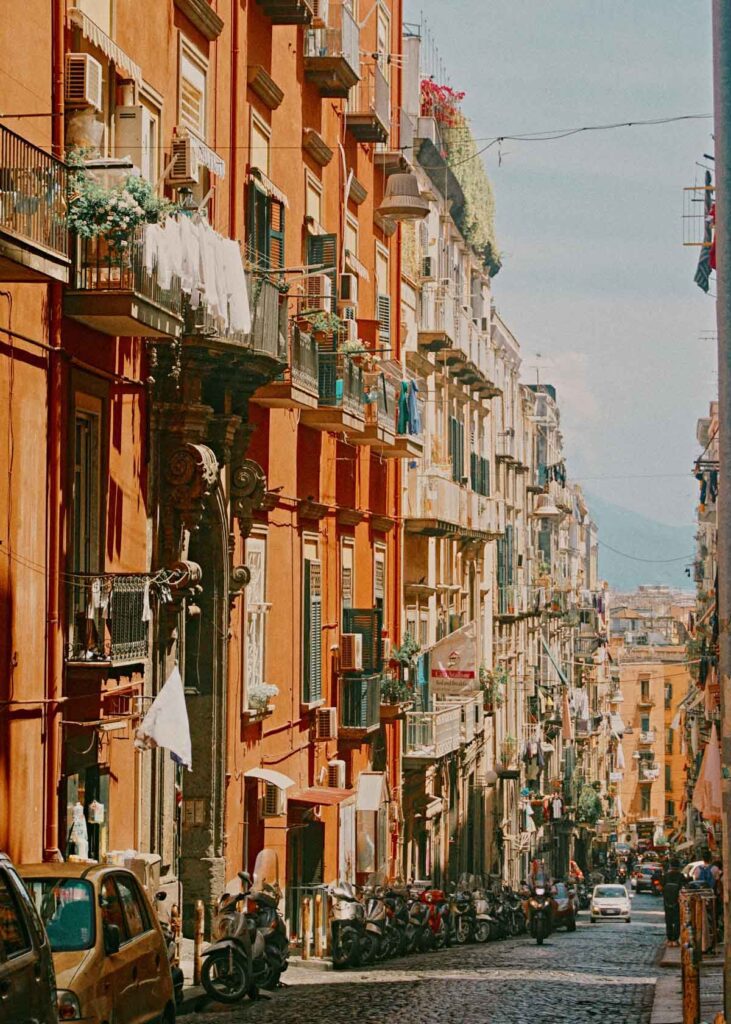
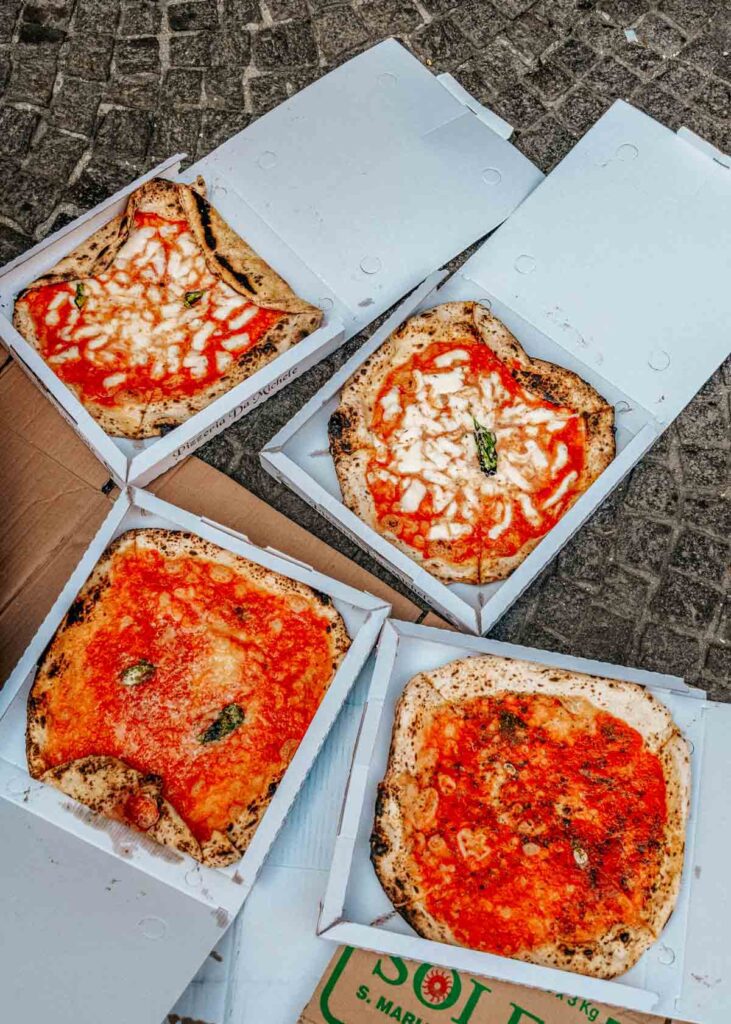
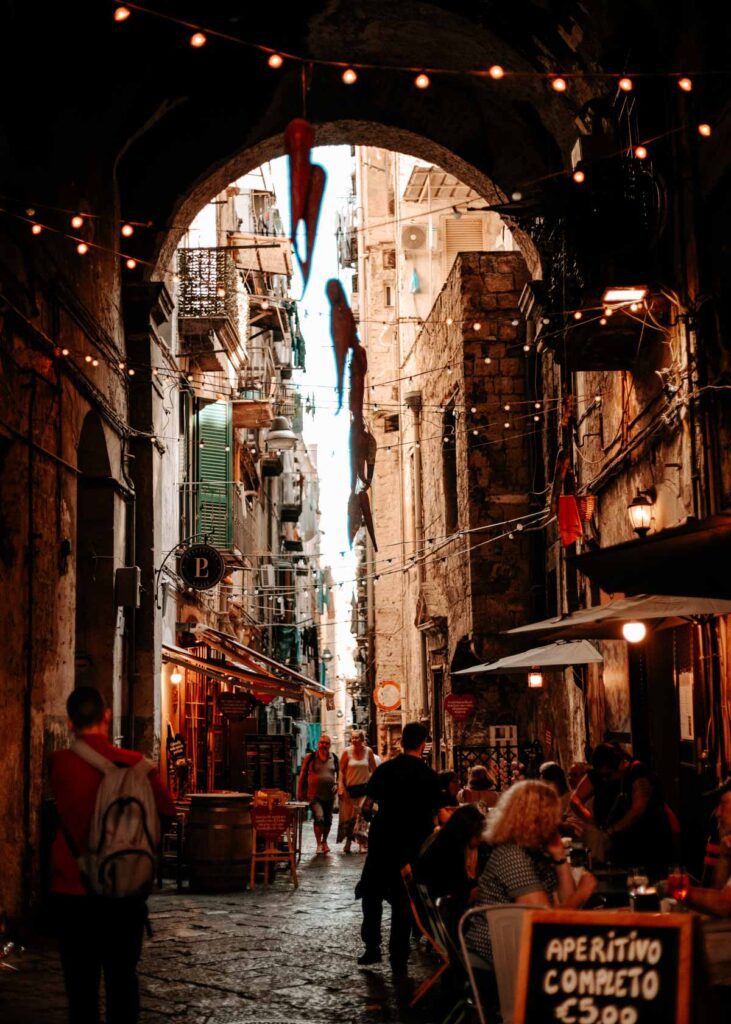
If you’re a major foodie like me (but eat dairy, unlike me), you’ll probably want to sign up for a Naples food tour. Although there weren’t any vegan food tours I could go on, my recommendation is this secret spots food tour, which is rated 5/5 by over 566 travelers—it’s a great way to eat at a ton of hole-in-the-wall spots with a local who knows exactly what to order. 🙌🏼
A few cool things to do in Naples include exploring the underground Spanish quarters, visiting the National Archaeological Museum, seeing the ‘famous Veiled Christ’ statue at Sansevero Chapel, and gazing out on the Bay of Naples from the historic Castel dell’Ovo castle.
Visit Sorrento’s Lemon Groves
While pizza is the thing to taste in Naples, limoncello (and all sort of other lemon-flavored goodies) is what the Amalfi and Sorrentine Coasts are known for.
And while there are plenty of lemon groves in Vico Equense, you’ll likely have to take the 15-minute train to Sorrento if you want to visit a grove yourself.
There are a few family-owned organic lemon farms that offer limoncello tastings and aperitif amongst the lemon groves. We were planning on visiting Villa Beatrice but unfortunately I got sick, which put a stop to some of our Vico Equense plans. This one is another more affordable lemon grove tasting experience.
Paddle Board to the Queen’s Bath
While you’re in Sorrento, you can’t miss the Bagni Regina Giovanna (Queen’s Bath), a stunning swimming hole nestled amongst the ruins of a 2,000-year-old villa. Apparently, this spot got its name because 17-year-old Queen of Naples, Regina Giovanna used to come here to bathe in the 1300s!
You can either hike down to the swimming hole or reach it via paddle board. Unfortunately, this was another one of the activities I had to scratch off my southern Italy itinerary when I got sick. But we did get to see the baths from the sea while cruising by on our Amalfi Coast boat tour!

Visit the Island of Capri & Blue Grotto
Taking a boat tour to the dazzling island of Capri and its famous Blue Grotto is one of the most popular things to do in the area.
This ritzy island has long be a favorite getaway for celebrities like Madonna, and despite how pricey a day trip here can be, Capri has become madly popular amongst all types of travelers.
The most budget-friendly way to explore Capri is to take the ferry from Sorrento, which takes only 40 minutes and costs €21.00 one-way. For updated timetables, prices, and other details, check here.
Once you arrive on the island, you can explore by Capri Town by foot (where you’ll dock) or take the bus to Anacapri, don’t miss the chairlift up to the summit of Monte Solaro!


Taking a boat tour around the island is also a must (if you have room for it in your budget). Many of the island’s most breathtaking sights can only be seen from the water!
The stunning Blue Grotto is the most popular place to see, but unfortunately the small sea cave is suffering from overtourism—which means its incredibly crowded and you only get a few moments inside it.
If you don’t mind skipping the Blue Grotto, this popular boat tour takes you to the equally stunning White Grotto, Green Grotto, Faraglioni Rocks, and several of lesser known spots, plus you get to taste some delicious local limoncello and jump in the azure Mediterranean!
If you prefer to spend your entire day on the water and don’t mind not docking on Capri, this highly-rated Capri boat tour directly from Sorrento is a lovely option.

Days 4-5: Castelmezzano (Dolomite Zip-Lining)
Next we’re heading through the Southern Dolomites to the white-washed towns of Puglia on Italy’s southeastern coast. But first, there are a few scenic stops to enjoy as we journey from coast to coast.
The only way to visit the stops on the road trip is to rent a car in Sorrento (or Naples). If you aren’t able to drive in Italy, you can reach Puglia by train (or a short flight), but you’ll miss out on these hidden gems of south Italy!
We rented our car from Hertz in downtown Sorrento, and you’ll find plenty of other car rental companies to choose from (compare prices on DiscoverCars). Be sure that you have an international drivers permit in advance if you’re not from the EU!
Then head out toward our next stop, Castelmezzano, Basilicata! The drive takes a little over two and a half hours, but we stopped for lunch in Salerno along the way. You could also take a slightly longer detour to see the ruins of the ancient Greek city Paestum, which many claim is even more interesting than Pompeii!
Castelmezzano
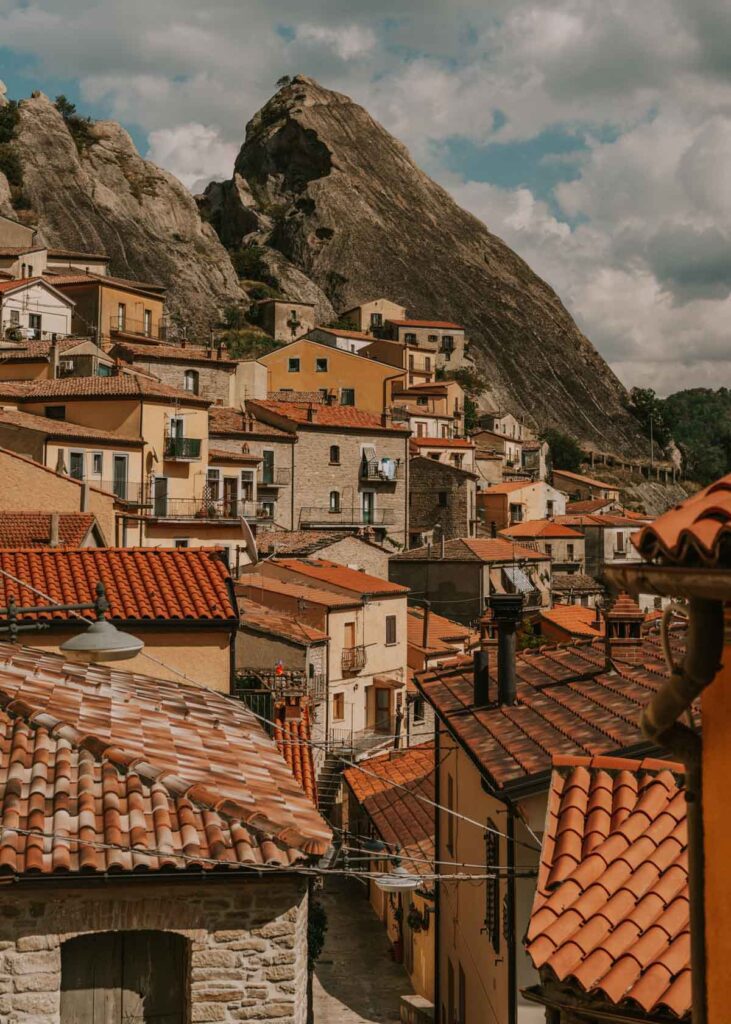
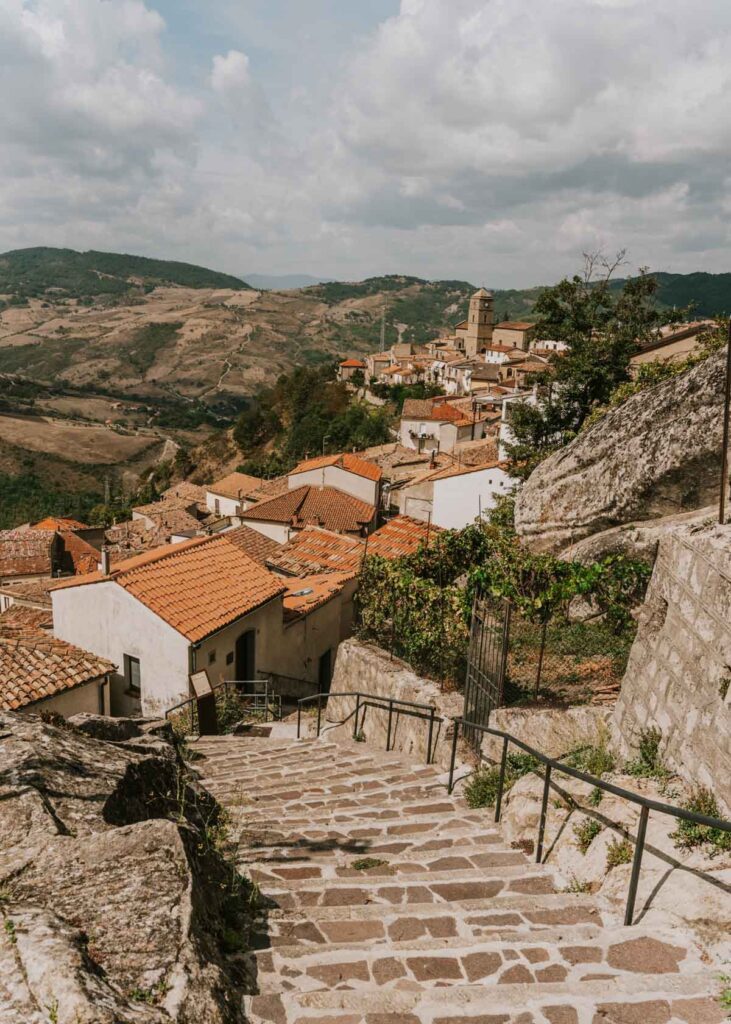
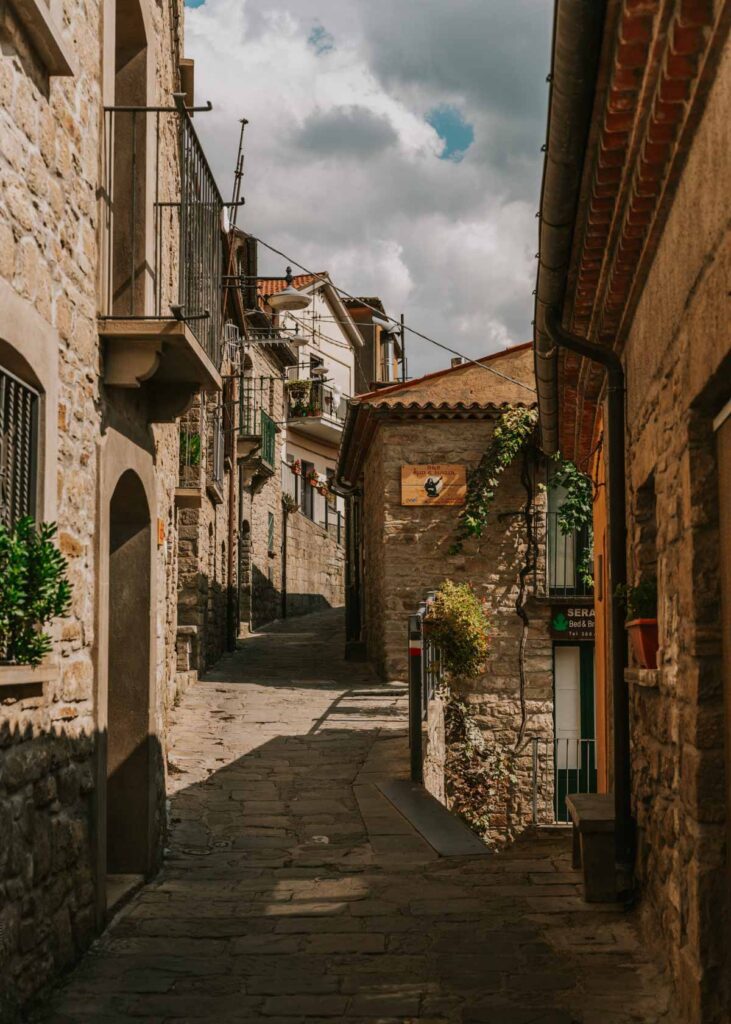
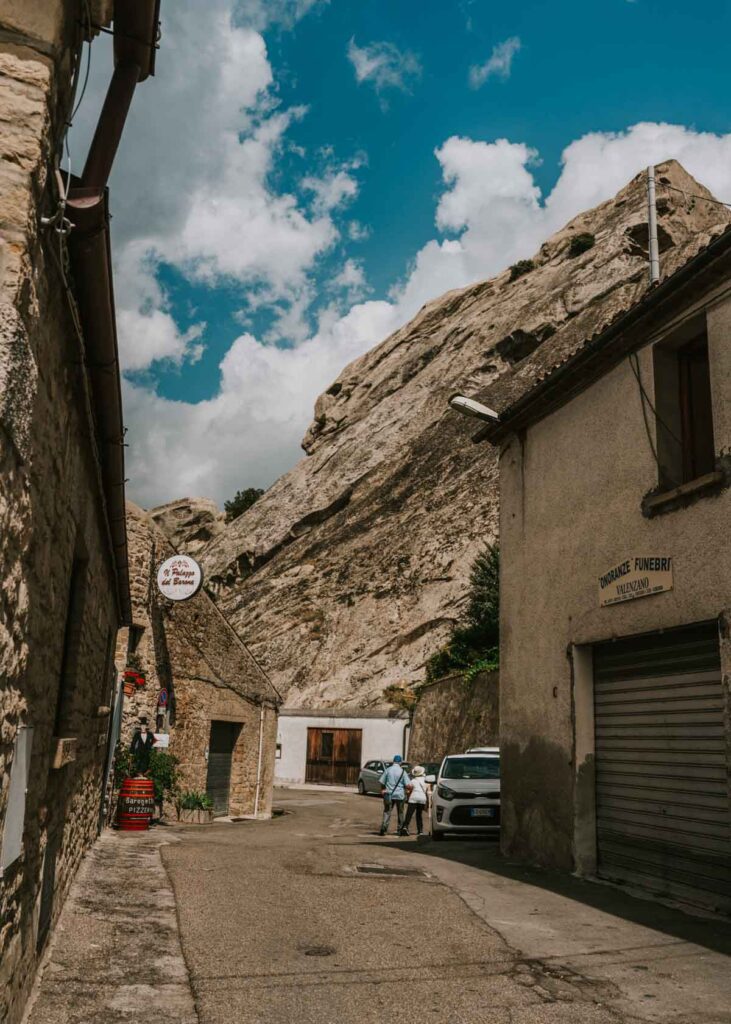
Castelmezzano was perhaps the most magical place we visited during our southern Italy trip… and not just because it the village itself looks like its straight out a fairy tale!
This quaint medieval village is literally forged into the dramatic peaks of the Lucanian Dolomites. And the magical thing to do here is zip-line nearly a mile over the gorge to the nearby village of Pietrapertosa—which is also built into the mountaintops and just as charming as Castelmezzano!
The zip-line route is called the Angel’s Flight, and you can reach speeds of up to 75 mph while soaring over 400 feet above the valley below. The birds-eye views are indescribable… and if you’re like me, awe will instantly replace any sense of fear as you fly through the fresh mountain air.
After the first flight from the peaks above Castelmezzano you get shuttled into Pietrapertosa, which is a lovely little mountain town to explore before your second flight back to the Castelmezzano side.
If you’re traveling with a loved one, you may be able to do the flight side-by-side, but keep in mind there are strict weight limits, for example, you cannot do it together if there is more than a 40 kilo (88 pound) weight difference between the two of you. That was the case with Josh and I, so we went individually—but it was still incredibly special for both of us!
Some other things to do in the area include:
- Hiking the Norman Stairway (Gradinata Normanna): Climb 54 steps carved into a steep peak, which once led a lookout post for the Castrum Medianum castle when Castelmezzano was occupied by the Normans.
- Hike the Seven Stone Path: A two kilometer trail that connects Castelmezzano to nearby Pietrapertosa. You can do this hike with a local guide if you prefer.
- Climb the Via Ferrata: A rock climbing course along the rugged Dolomites with fixed cables and iron rungs.
- Walk the Streets of Castelmezzano & Pietrapertosa: There aren’t a lot of other things to do in these towns, but embracing the slowness of life here is apart of the experience!
📍 Where to Stay in Castelmezzano: There are no hotels, just local-owned B&Bs, which you can browse on Booking. We stayed at a lovely B&B in the heart of town for about $100, but unfortunately it looks like they’re no longer taking bookings. Keep in mind that you stay in the old part of the town, you will have to carry your luggage from the parking area up to your place. Since we only stayed one night, we left our suitcases in our rental car trunk and just brought a small bag of essentials.


Day 5: Matera to Puglia
After a lovely overnight stop in Castelmezzano, continue your journey east with one last scenic stop in the history-drenched town of Matera.
One of the world’s oldest continually inhabited cities, Matera is carved straight into the limestone of Basilicata’s Lucanian Apennines and Gravina Gorge. The city’s hauntingly beautiful Medieval Sassi district spirals up the dramatic hillside, perched over the Gravina Gorge, where over 1,000 ancient cave dwellings are hollowed into the cliffs.
Once described as the “Shame of Italy,” Matera was a place of profound poverty—and you can read about it in the book Christ Stopped at Eboli. But today it is a UNESCO World Heritage Site and was named European Capital of Culture in 2019. You might also recognize it from the 25th James Bond film No Time To Die and a variety of biblical films including The Passion of Christ.


I first visited Matera in 2017 when I was living in Italy and I was the only person staying in my entire hostel—I remember spotting ocean fossils in the exposed limestone arch over my dorm bed, and wandering the quiet labyrinth-like streets of the Sassi with almost no one else around.
Since then, tourism has increased by at least 8x, but becuase of its secluded location in southern Italy, Matera still feels like a bit of a hidden gem!
During our southern Italy road trip we just stopped in Matera for a few hours while driving between Castelmezzano and Puglia, but you could absolutely spend the night if you’d like.
There are plenty of luxurious cave hotels for a once-in-a-lifetime kind of stay as well as more affordable options like The Rock Hostel, where I stayed back on my first trip to Matera.
The best things to do in Matera include:
- Hike beside Matera’s ancient cave dwellings at Murgia Materana Park. Along the way you’ll cross a suspension bridge through the stunning ravine that separates the Sassi from the ancient settlements on the other side.
- Visit the Rock Church (Church of Saint Mary of Idris), a small chapel inside of a cave perched at the top of the Sassi
- Get a picture-perfect view of the Sassi from like Tre Archi or The Convent of Saint Agostino
- Wander the streets of the Sassi, there is so much to see here, including small museums, ancient churches, and stunning viewpoints. If it works with your schedule, join this excellent group walking tour to learn more about the history.
- Try traditional Basilicata cuisine. We ate at Da Nonna Rosa, a deli-style restaurant with a variety of freshly made regional dishes like the humble Fave e Cicoria, a fava bean soup with chicory. They also serve local wine!
🚙 Parking in Matera: Finding parking can be a little tricky, but this parking guide from Matera Tourism is helpful!

Days 6-10: Puglia (Polignano a Mare, Monopoli, Ostuni, Wine Tasting & More)
For the last few days of your trip, base yourself in one of Puglia’s white-washed coastal towns. We stayed in Polignano a Mare, which is the same lovely town I stayed during my solo trip to Puglia in 2017.
Polignano a Mare is a postcard-worthy town perched on the cliffs over the turquoise Adriatic Sea. Originally settled by the Greeks in the 4th century BC, it still feels a bit Greek with the bright white buildings and enchanting sea caves.
Although this little town can get very crowded during peak tourist season, I still chose as the base for our Puglia explorations because it had everything we needed within a short walking distance!
We were able to book a stunning B&B in the walled old town with a rooftop overlooking the famed Lama Monachile beach—which was also a short walk away anytime we wanted to jump in for a swim! And most of Polignano a Mare’s best restaurants and bars were just steps away from our B&B… including the best focaccia I’ve ever had, which I’ll share about in a bit!!
- 🌊 Other places to stay in Polignano a Mare for the best location: Calumàre, A Casa di Dany, Mareluna, and Malù Bed & Breakfast
- 👩🏼🌾 Alternatively, stay at one of Puglia’s stunning historic farmhouses, called masserias, like Masseria Montenapoleone or Trulivo.


Things to while staying in Polignano a Mare:
Eat, drink, and explore in Polignano a Mare
Polignano a Mare is completely walkable, in fact, the small walled old town is pedestrian-only. The best thing to do here to simply wander through the winding white-washed streets and explore along the way!
A few notable things to do include:
- Swim at Lama Monachile: Swim at one of Italy’s most famous beaches! It does get really crowded here but the views are still pristine and there’s a little cave you can swim into on the right side of the little bay.
- Explore Poliganao a Mare’s sea caves by boat: Swim in several of Polignano a Mare’s 40 stunning sea caves on this highly-rated $40 boat tour.
- Learn to make traditional Puglian cuisine: Make a spongey foccacia and fresh orecchiette pasta while sipping Puglian wine at this highly-rated cooking class.
- See the Volare banners along Via Roma: Polignano a Mare is the birthplace of Domenico Modugno who sang “Volare”. Wander down Via Roma in the evening and hum the tune as the lyrics light up above you.
My favorite places to eat and drink include:
- MINT Cucina Fresca: Call a few days ahead to make a reservation at this charming intimate little restaurant with innovative flavor-packed dishes and cocktails.
- La Focacceria Delle Noci Marco: Heavenly grab-and-go focaccia with a variety of toppings. This makes the perfect snack or lunch on the go!
- Cactus: Hole in the wall bar with natural wine, cocktails, and food.
- Habitat Cafe: Delicious Italian coffee and pastries in a more local area of town, with vegan cornettos!
🚙 Parking in Polignano a Mare: Free parking is available right next to the train station here.
Take a half-day trip to nearby Monopoli
Less than fifteen minutes down the road from Polignano a Mare, Monopoli is another charming Puglian fishing village that’s worth exploring for a few hours.
Here you can see a 1500’s stone castle, wander along the picturesque old fishing port (porto antico), and visit several of Monopoli’s stunning cathedrals. If you have extra time, check out this bike tour to the nearby olive groves to taste some of Puglia’s freshest olive oil!


We simply enjoyed wandering the streets of the Old City and absolutely loved our meal at Munz Munz biOstrot, a vegan restaurant that had some of the best food we ate in all of Puglia!
Visit the hilltop white-washed city of Ostuni
Called Puglia’s ‘White City,’ Ostuni is a towering hilltop city surrounded by olive groves. Unlike Polignano a Mare and Monopoli, Ostuni is not a port town, so it has a bit of a different feel.
The cars are prohibited in the majority of the hilltop city, so you have to find parking at the base of the city and wander the maze-like streets of Ostuni on foot.


Once you’re in the Old City, the best thing to do is simply wander…. and see what hidden gems you find! If you’d like to explore with a local guide, check out this excellent private walking tour.
And if you only do one thing in Ostuni, check out Taverna della Gelosia, a lovely Puglian restaurant tucked into a small garden with views of the countryside and Mediterranean Sea! I’d also highly recommend Cremeria Alla Scala for delicious gelato and sorbetto.
Go beach hopping
Puglia is an an Italian beach destination in the summertime, and although many beaches are quite rocky, there are several sandy beaches and other unique places to swim if you know where you look!
For a golden sand beach with gentle waves and crystal clear water, check out Calette di Torre Cintola. It’s about forty minutes south of Polignano a Mare, but worth the drive! The beach is located in a protected nature preserve, and you actually have to take a little trolly to the beach from the parking area, but the trolly comes frequently and is part of the fun!
Closer to Monopoli and Polignano a Mare you’ll find Calette di Torre Cintola, where you can swim and snorkel amongst the ruins of a 16th century watchtower. This was a lot of fun, but we wished we had water shoes because there was some broken glass and slippery stone you had to navigate to get in the water.

We also considered driving southwest to one of the less touristy sandy beaches along the southern side of Puglia, like Spiaggia di Punta Prosciutto. If we’d had more time, we would have done this and explored more of the Puglian countryside along the way!
Try the fiery Assassin’s Spaghetti in Bari
Most people skip Puglia’s capital city, Bari becuase its more modern than the smaller charming towns elsewhere in the region, but it can still be a lovely place to explore!
And if you’re a foodie like me, you have to try Bari’s famous Spaghetti all’assassina, which literally translates to Assassin’s Spaghettii. This flavor-packed pasta dish breaks all the rules by intentionally charring the spaghetti to make it crispy. The texture is fun, but the spicy tomato sauce is the star of the show for me.
In Bari you can taste the original version at Alla Barese, or head to l’assassineria Urbana, which has several versions of Spaghetti all’assassina and is said it actually be better than the first restaurant!
See the UNESCO World Heritage Trulli Houses of Alberobello
The small town of Alberobello is home to Puglia’s most Instagram-worthy houses—Trulli houses. These cone-roofed stone homes are built entirely without mortar using dry-stone techniques.
The story goes that locals built their homes this was in the 1600s to avoid paying taxes to the Kingdom of Naples. Since they were built without mortar, they could easily be disassembled when tax inspectors came around—crazy, right?

Although there isn’t a lot to do in Alberobello besides wander through the Rione Monti and snap photos in front of the trulli, this charming little town makes a fun half day trip if you have time!
Go wine tasting at a Puglia vineyard
Puglia isn’t known around the world for its wine, but it actually should be! That’s becuase much of Italy’s most famous wine—particularly those from Tuscany—are actually made partly with Puglian grapes.
There are tons of vineyards to choose from, but we went with Azienda Agricola L’Essenza di Puglia Carovigno, an organic family-run winery situated between Carovigno and the Adriatic Sea.


We got a private tour of the land with the owner and winemaker, Giancarlo, and tasted all their delicious organic wines and olive oils. Giancarlo lives on the land with his wife—and the property has been in their family for four generations.
How to get back to the Airport
We booked our roundtrip flights to Italy to Rome Fiumicino Airport. So, though we ended our southern Italy roadtrip in Puglia, we needed to get back to Rome!
We dropped off our rental car at the Bari airport and took a short 1 hour flight to Rome! Since our flight home wasn’t until the next day, we spent the night in Lido di Ostia, which is a seaside neighborhood of Rome. It’s quite far from the center of Rome, but close to the airports!
This part of Rome is a little funky and retro and enjoyed spending our last few hours in Italy here while staying Hotel Sirenetta, which feels like it is straight out of a movie!
More Italy Travel Guides
- The PERFECT 3 Day Rome Itinerary (With Hidden Gems)
- How to Plan Your First Trip to Italy
- What You NEED to Book in Advance for Rome (And How to Book!)
- Visiting Vico Equense, Italy: A Hidden Gem Near the Amalfi Coast
- 7 Tips for Visiting the Vatican for the First Time
Save for later on Pinterest:


